
Bioavailability in skincare is defined as the fraction of an active ingredient that successfully crosses the skin barrier to reach living skin cells in an effective form. This concept separates products that genuinely work from those that simply look impressive on a label. The stratum corneum, the outermost layer of skin, blocks most topically applied actives before they reach their target tissue. Understanding what is bioavailability in skincare means understanding that ingredient concentration on a product label tells you almost nothing about how much of that ingredient your skin actually uses. Dermatological and pharmacological research treats bioavailability as the primary measure of topical product efficacy, not the percentage listed on the bottle.
How does the skin barrier affect bioavailability in skincare?
The stratum corneum is the body’s first and most effective line of defense. It is a tightly packed layer of dead skin cells embedded in a lipid matrix, and its entire biological purpose is to keep foreign substances out. Most topically applied actives remain on the skin surface rather than penetrating to living tissue. That means a significant portion of what you apply never delivers its intended effect.
Several physicochemical properties determine whether an ingredient can cross this barrier:
- Molecular size: Smaller molecules penetrate more readily. Large proteins and peptides struggle to pass through intact skin.
- Lipophilicity: The stratum corneum is lipid-rich, so oil-soluble ingredients cross more easily than water-soluble ones.
- Electrical charge: Charged or ionic molecules are repelled by the lipid barrier. Neutralizing the charge through pH adjustment is often required.
- Solubility: An ingredient must dissolve in both the formula and the skin’s lipid environment to move through the barrier effectively.
A well-known example is Vitamin C. In its active form, L-ascorbic acid, Vitamin C requires a formula pH below 3.5 to remain uncharged and capable of crossing the lipid barrier. Above that pH, it ionizes and sits on the surface doing very little.
Beyond the stratum corneum, minor absorption pathways exist through hair follicles and sebaceous glands. These appendageal routes bypass the barrier entirely but account for a small fraction of total absorption. They are more relevant for nanoparticle-based formulas, where particle size allows follicular entry.
Pro Tip: Apply actives to clean, slightly damp skin. Water temporarily swells the stratum corneum, widening the spaces between cells and improving ingredient passage.
What formulation and delivery technologies improve bioavailability of skincare products?
Formulation science is where bioavailability in cosmetics is won or lost. The same active ingredient in two different formulas can produce dramatically different results based entirely on how it is delivered to the skin.
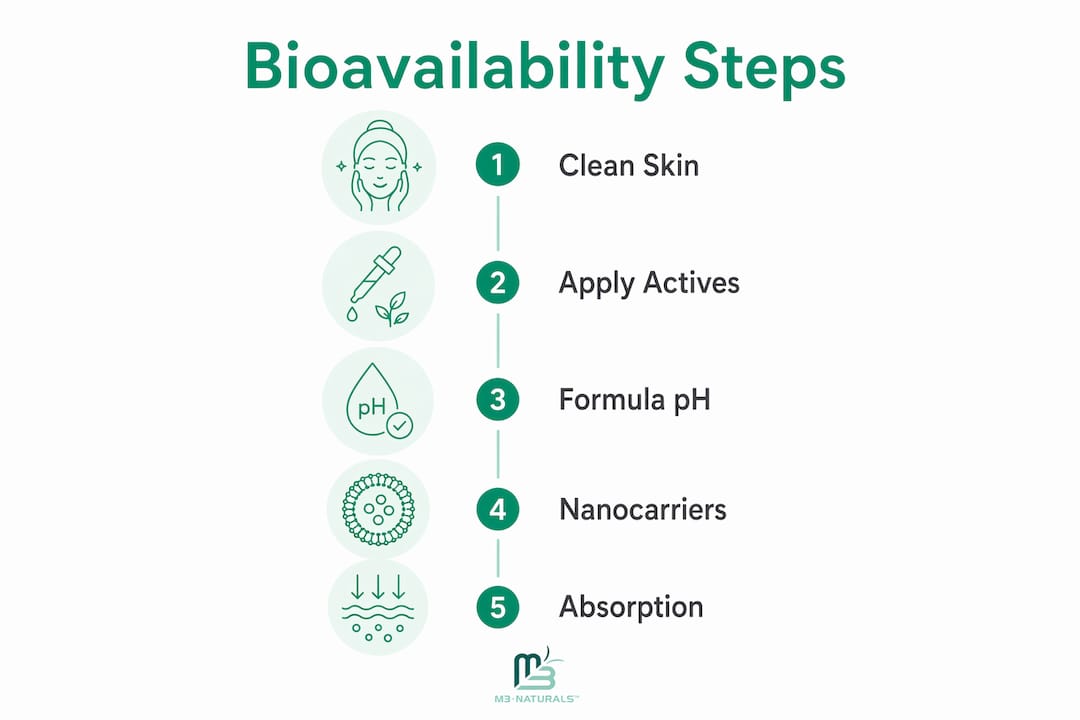
Nanocarrier delivery systems
Nanotechnology, including liposomes and polymeric nanoparticles, improves bioavailability by increasing ingredient stability, solubility, and penetration depth. Liposomes are spherical lipid vesicles that mimic the skin’s own membrane structure, allowing them to fuse with the stratum corneum and deposit their contents directly into deeper layers. Nanosomes and polymeric nanoparticles work similarly but offer greater structural stability.

Encapsulation technology uses lipid or polymer shells to ferry actives through the barrier while shielding unstable ingredients from light, oxygen, and pH degradation. This protection matters because many actives, including retinol and Vitamin C, degrade rapidly when exposed to air. Encapsulation enables controlled release of actives upon skin contact, meaning the ingredient delivers gradually rather than all at once, reducing irritation and extending efficacy.
The results are measurable. Optimized lipid nanoparticles improved niacinamide permeation by 39% and delivery efficiency by 22% compared to non-optimized formulations. That is not a marginal gain. It means a well-formulated niacinamide product at a lower concentration can outperform a poorly formulated one at a higher concentration.
pH and anhydrous formulas
Formula pH directly controls the charge state of many actives. A lower pH keeps Vitamin C in its uncharged, penetration-ready form. Anhydrous (water-free) formulas, such as oil-based serums, remove the aqueous environment that promotes ionization of certain molecules, keeping them in a lipid-compatible state for better barrier crossing. Understanding how pH influences skin penetration is one of the most practical tools you have as a skincare consumer.
| Delivery technology | Key benefit | Best suited for |
|---|---|---|
| Liposomes | Fuse with skin membrane; deposit actives in deeper layers | Hydrophilic actives, peptides |
| Polymeric nanoparticles | High stability; controlled release | Retinol, Vitamin C, antioxidants |
| Lipid nanoparticles | Improved permeation; protects from degradation | Niacinamide, ceramides |
| Anhydrous (oil-based) formulas | Maintains lipophilic state; reduces ionization | Oil-soluble actives |
Regulatory bodies note that particles smaller than 20 nm require careful safety assessment in cosmetics due to potential systemic uptake risks. Reputable brands using nanocarrier technology conduct this assessment before bringing products to market.
Pro Tip: Look for terms like “liposomal,” “encapsulated,” or “nanosome” on product packaging. These signal that the formula uses delivery technology designed to move actives past the skin barrier, not just sit on top of it.
How do different skin delivery methods compare in bioavailability?
Not all delivery methods are equal. The route of application determines how much of an active actually reaches its target.
Topical application is the most common method and the most limited. The stratum corneum caps absorption, and most product remains on the surface rather than penetrating to living cells. Advanced formulation technologies close this gap significantly, but topical application will always face some barrier limitation.
Intradermal injection, used in techniques like mesotherapy, bypasses the stratum corneum entirely. Mesotherapy delivers actives directly into the dermis, achieving near-complete local bioavailability. This approach is used clinically for ingredients like hyaluronic acid, PDRN, and vitamins where deep dermal delivery is required. The tradeoff is cost, access, and the need for a trained practitioner. You can learn more about injectable skin delivery and how it compares to topical methods.
Microneedling and nano-needling represent a middle ground. These techniques create microchannels in the stratum corneum, temporarily bypassing the barrier and allowing topically applied actives to penetrate far deeper than they could on intact skin. Nano-needling enhances ingredient absorption without the recovery time associated with deeper microneedling procedures, making it accessible for regular use.
Key differences at a glance:
- Topical application: accessible, non-invasive, limited by stratum corneum
- Intradermal injection: near-complete local bioavailability, requires clinical setting
- Microneedling: significantly improved penetration, some downtime
- Nano-needling: improved penetration, minimal recovery, suitable for home or professional use
What practical steps improve bioavailability when using skincare products?
You do not need a clinical procedure to meaningfully improve how much of your skincare actually works. Several application habits and product choices make a real difference.
-
Cleanse before applying actives. Product residue, sebum, and dead skin cells form a physical barrier on top of the stratum corneum. A clean surface removes this extra layer and gives actives direct contact with skin.
-
Exfoliate regularly but gently. Mild exfoliation with an ingredient like lactic acid or a physical scrub reduces the thickness of the outermost dead cell layer. Thinner stratum corneum means shorter distance for actives to travel. M3naturals body scrubs, formulated with natural botanicals, support this step without disrupting the skin’s moisture balance.
-
Layer products by molecular weight. Apply water-based serums before oils and creams. Heavier occlusive layers applied first block lighter molecules from penetrating. Correct layering preserves the absorption window for each product.
-
Choose carrier oils that support penetration. Certain carrier oils, including jojoba and rosehip, have fatty acid profiles that complement the skin’s lipid matrix. They act as vehicles that carry actives deeper rather than sitting on the surface. The science behind how carrier oils work explains why oil choice matters as much as the active ingredient itself.
-
Check for pH-adjusted formulas. When buying Vitamin C or exfoliating acid products, look for pH information on the packaging or brand website. A serum with no pH disclosure is a red flag for poor formulation transparency.
Pro Tip: Apply your most active serums within 60 seconds of cleansing while skin is still slightly damp. Hydrated skin is more permeable, and the absorption window closes quickly as skin dries.
Key Takeaways
Bioavailability determines how much of a skincare ingredient actually reaches living skin cells, making formulation quality more important than ingredient concentration alone.
| Point | Details |
|---|---|
| Bioavailability defined | It is the fraction of an active that crosses the skin barrier to reach living cells in effective form. |
| Stratum corneum is the main barrier | Most topically applied actives stay on the surface; barrier properties limit absorption by default. |
| Formulation beats concentration | Nanocarriers like liposomes and lipid nanoparticles improve penetration more than raising ingredient percentages. |
| pH controls charge and penetration | Vitamin C requires a formula pH below 3.5 to remain uncharged and cross the lipid barrier effectively. |
| Application technique matters | Cleansing, gentle exfoliation, and correct product layering measurably improve how much active your skin absorbs. |
Why I think the skincare industry’s obsession with percentages misses the point
The most persistent myth in skincare is that a higher percentage on the label equals a better product. I have seen 20% Vitamin C serums outperformed by 10% formulations, and the difference was never the number. It was always the delivery system, the pH, and the stability of the formula.
Marketing has trained consumers to treat ingredient percentages like proof of efficacy. They are not. A 30% concentration of an active that sits on the stratum corneum and degrades within weeks delivers less benefit than a 5% encapsulated version that reaches the dermis intact. The formulation science behind bioavailability is what separates a product that works from one that just sounds impressive.
My recommendation: read beyond the ingredient list. Look for formulation details, pH disclosures, and delivery technology language. Brands that invest in real bioavailability science tend to be transparent about it. Brands that lead with percentages and nothing else are usually selling you the idea of efficacy rather than the reality of it. Skepticism here is not cynicism. It is the most informed thing you can do for your skin.
— SuperNatural
M3naturals products formulated for real ingredient absorption
Knowing how bioavailability works changes how you shop for skincare. The next step is choosing products built around the same principles.
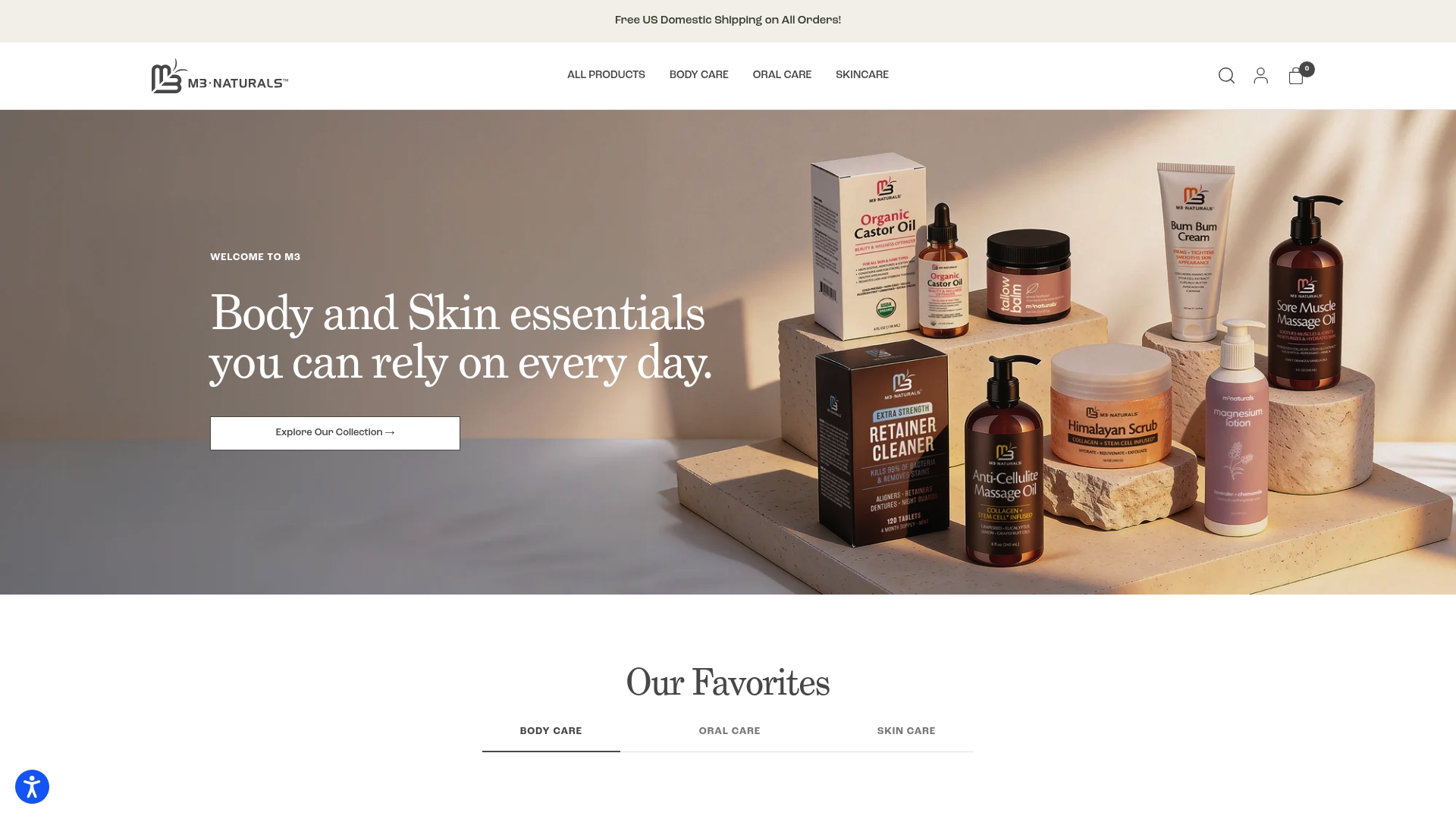
M3naturals formulates its skincare collection with natural, ethically sourced ingredients chosen for both their activity and their compatibility with skin’s lipid structure. The body scrub range prepares skin by clearing surface buildup before you apply actives, giving your serums and treatments a clean path to the stratum corneum. The massage oil collection, built on carrier oils like coconut and botanical extracts, supports active ingredient delivery by working with the skin’s natural lipid environment rather than against it. Each product reflects the principle that what reaches your skin matters more than what is listed on the label.
FAQ
What is bioavailability in skincare, simply explained?
Bioavailability in skincare is the percentage of an active ingredient that crosses the skin barrier and reaches living skin cells in a usable form. A high-concentration product with low bioavailability delivers less benefit than a lower-concentration product with superior formulation.
Why does the stratum corneum limit ingredient absorption?
The stratum corneum is a lipid-rich barrier designed to block foreign substances. Most topically applied actives remain on the surface because they cannot cross this layer without the right molecular size, charge, and lipophilicity.
How do liposomes improve bioavailability in cosmetics?
Liposomes are lipid vesicles that fuse with the skin’s membrane structure, depositing actives directly into deeper skin layers. They also protect unstable ingredients from degradation, extending the active life of the formula.
Does a higher ingredient percentage always mean better results?
No. Formulation quality, pH, and delivery technology determine how much of an ingredient reaches its target. Optimized lipid nanoparticles improved niacinamide permeation by 39% compared to non-optimized formulations, regardless of concentration.
How can I improve bioavailability skincare results at home?
Cleanse skin before applying actives, exfoliate gently to thin the dead cell layer, layer products from lightest to heaviest, and apply serums to slightly damp skin. These steps reduce surface barriers and extend the absorption window for every product you use.