

Skin cycling is defined as a structured 4-night nighttime skincare routine that rotates exfoliation, retinoid use, and recovery nights to improve skin health while reducing irritation. Board-certified dermatologist Dr. Whitney Bowe developed and popularized the method, which quickly gained traction for its practical, science-backed approach. The core idea behind what is skin cycling routine is simple: give your skin active ingredients on specific nights, then let it recover before applying them again. This spacing prevents the barrier damage that comes from using potent actives every day. Consistent practice over 4–8 weeks produces visible improvements in texture, tone, and clarity.
How does skin cycling work?
Skin cycling works by alternating active ingredient nights with dedicated recovery nights, giving your skin barrier time to rebuild between treatments. The 4-night rotation follows this structure:
- Night 1 (Exfoliation): Apply a chemical exfoliant, either an AHA or BHA, to clean, dry skin. This removes dead cells and preps the surface.
- Night 2 (Retinoid): Apply a retinoid serum. The freshly exfoliated skin absorbs it more effectively, so lower concentrations can still deliver strong results.
- Night 3 (Recovery): Skip all actives. Focus on ceramides, hyaluronic acid, and a rich moisturizer to rebuild the lipid barrier.
- Night 4 (Recovery): Repeat Night 3. Let the barrier fully consolidate before the cycle restarts.
The science behind this rhythm connects to two biological facts. First, your skin’s natural cell turnover cycle runs approximately 28 days, meaning it already operates on a rhythm. Second, barrier recovery requires 3–7 days after exposure to strong actives. Spacing treatments respects that timeline instead of fighting it.
Dermatological research shows that intermittent retinoid use produces comparable long-term benefits to daily use, but with significantly fewer side effects. That finding is the backbone of skin cycling’s effectiveness. You get the results without the redness, peeling, and sensitivity that drive most people to quit retinoids within weeks.

Pro Tip: Exfoliation on Night 1 is not just about removing dead skin. It primes the surface so your retinoid on Night 2 penetrates more efficiently, which means you can use a lower concentration and still see real results.
What are the benefits of a skin cycling routine?
The benefits of skin cycling go beyond just avoiding irritation. They compound over time when you stay consistent.
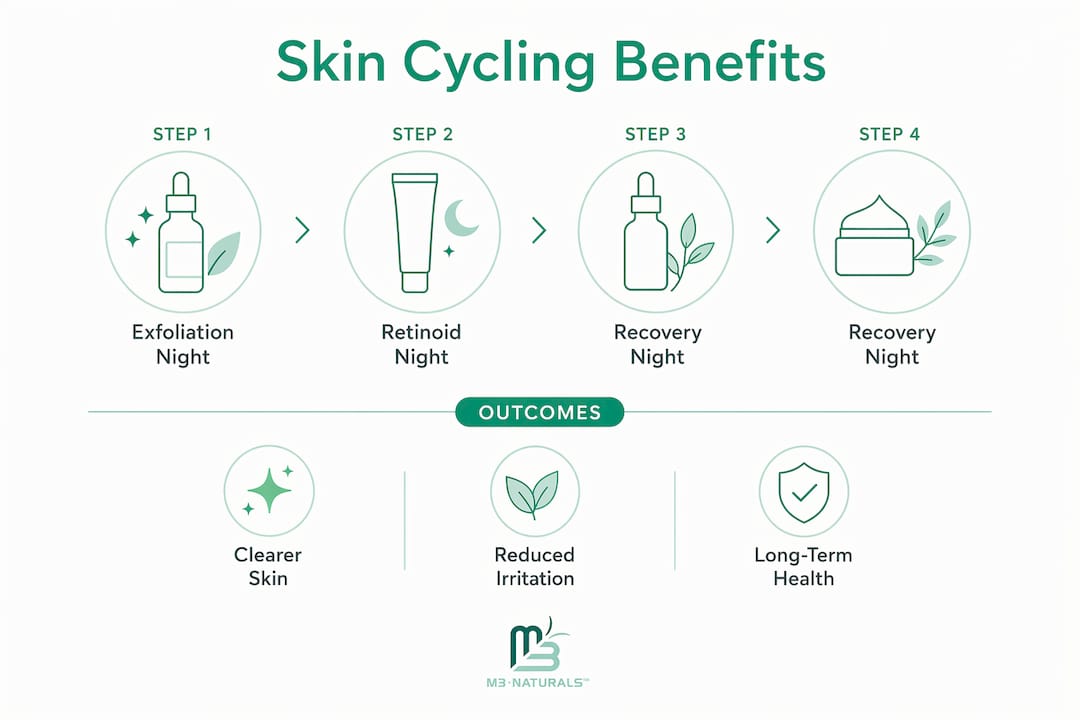
Improved skin texture and tone. Most people notice clearer, smoother skin within 4–8 weeks of starting the routine. The alternating cycle keeps cell turnover active without overwhelming the barrier.
Reduced retinoid dermatitis. Daily retinoid use is the leading cause of retinoid dermatitis, a condition marked by persistent redness, flaking, and stinging. Spacing retinoid nights to once per cycle cuts that risk significantly.
Sustainable long-term practice. Active ingredient fatigue is real. When your skin is constantly irritated, you stop using the products that would otherwise help. Skin cycling builds a rhythm you can maintain for months and years.
Cost savings on premium products. Using retinoids and exfoliants less frequently means they last longer. Skin cycling can make those products last 20–30% longer compared to daily application. That matters when you are investing in quality formulas.
Barrier health as a long-term asset. The lipid barrier is the skin’s primary defense against premature aging, acne, and environmental damage. Recovery nights rebuild it deliberately. Over months, that consistent rebuilding produces the kind of skin clarity that no single product can deliver alone. Understanding natural ingredients and their skin benefits helps you choose the right recovery night products to support this process.
How to start a skin cycling routine: steps and products
Starting skin cycling requires four core products: a gentle cleanser, a chemical exfoliant (AHA or BHA), a retinoid serum, and a hydrating moisturizer. That is the full toolkit. You do not need a 10-step routine to make this work.
The four-night sequence
-
Night 1 (Exfoliation night): Cleanse your face. Pat it dry completely. Apply your chemical exfoliant, such as a glycolic acid or salicylic acid formula, directly to dry skin. Wait the time specified on the product. Follow with a light moisturizer. Do not layer other actives on top.
-
Night 2 (Retinoid night): Cleanse and dry your skin. Apply a thin layer of moisturizer first. Then apply your retinoid. Finish with another layer of moisturizer on top. This “sandwiching” technique is a professional method that reduces retinoid irritation while preserving its effectiveness, making it the best approach for beginners and sensitive skin.
-
Night 3 (First recovery night): Cleanse gently. Apply ceramide-rich moisturizer and a hyaluronic acid serum if you have one. The goal is hydration and barrier repair, nothing else.
-
Night 4 (Second recovery night): Repeat Night 3. Your skin uses both nights to fully restore its lipid barrier before the next exfoliation.
Adapting for your skin type
Sensitive or reactive skin often needs more than two recovery nights. Longer recovery periods of 5–6 nights between active nights are a valid and recommended adjustment. The schedule should respond to your skin, not the other way around. If you notice persistent redness or stinging, add another recovery night before restarting the cycle.
Avoid physical scrubs entirely on exfoliation nights. Chemical exfoliants are the safer choice because physical scrubs can cause micro-tears in the skin, which become a serious problem when you apply retinoids the following night. Stick to AHAs or BHAs.
Every morning, regardless of what you did the night before, apply SPF 30 or higher. Chemical exfoliants and retinoids increase UV sensitivity, and skipping sunscreen undoes much of the progress the routine builds. Daily sun protection is non-negotiable.
Pro Tip: Commit to at least four full cycles before evaluating results. Skin turnover takes time, and most people quit right before the improvements become visible.
Common skin cycling mistakes and how to avoid them
Most people who struggle with skin cycling make the same handful of errors. Recognizing them early saves weeks of setbacks.
-
Skipping recovery nights. Recovery nights are not optional rest days. They are when the barrier rebuilds. Skipping them to add more active nights defeats the entire purpose of the method and leads to the same irritation you were trying to avoid.
-
Using physical scrubs on exfoliation nights. Physical scrubs create micro-tears that make the skin more vulnerable to retinoid irritation the following night. Dermatologists consistently recommend AHAs and BHAs as the only appropriate exfoliants for this routine.
-
Ignoring skin signals. Persistent redness, stinging, or flaking are signals to slow down, not push through. Adjusting your cycle length based on how your skin responses is a sign of good practice, not failure. The dermatological research on skin cycling consistently supports listening to skin tolerance over rigid schedules.
-
Skipping morning SPF. Active ingredients used at night increase daytime UV sensitivity. Forgetting sunscreen in the morning exposes already-sensitized skin to damage that accelerates aging and irritation.
-
Mixing incompatible ingredients on active nights. Layering multiple actives, such as vitamin C, AHAs, and retinoids, on the same night overloads the skin. Each active night should feature one active only. Recovery nights are for hydration, not additional treatments.
-
Expecting results in one week. Skin cycling produces results over 4–8 weeks of consistent practice. Evaluating the routine after a few days and abandoning it is the most common reason people miss the benefits entirely.
A broader look at body care routine best practices reinforces why recovery and consistency matter across all skin health approaches, not just facial routines.
Key Takeaways
Skin cycling is the most effective structured nighttime routine for people who want real results from retinoids and exfoliants without the irritation that comes from daily use.
| Point | Details |
|---|---|
| Core structure | The 4-night cycle alternates exfoliation, retinoid, and two recovery nights, then repeats. |
| Recovery nights are non-negotiable | Skipping recovery nights damages the barrier and causes the irritation the routine is designed to prevent. |
| Chemical exfoliants only | Use AHAs or BHAs on Night 1. Physical scrubs cause micro-tears that worsen retinoid sensitivity. |
| Sandwiching reduces irritation | Apply moisturizer before and after retinoid on Night 2 to lower irritation risk without losing effectiveness. |
| Daily SPF is required | Retinoids and exfoliants increase UV sensitivity, making SPF 30+ every morning a fixed part of the routine. |
Why I think skin cycling is the most underrated reset in skincare
Most skincare advice pushes more: more products, more steps, more actives applied more often. Skin cycling does the opposite, and that is exactly why it works. The people I see struggle most with their skin are not using too few products. They are using too many, too often, with no recovery built in.
What strikes me about skin cycling is that it reframes rest as a feature, not a gap. The two recovery nights are where the real work happens. The barrier rebuilds, inflammation settles, and the skin becomes more receptive to the next round of actives. Most people skip that phase because it feels passive. It is not.
My honest advice: start more conservatively than you think you need to. If you have sensitive skin, begin with three or even four recovery nights between active nights. The skin cycling approach is a flexible rhythm, not a fixed prescription. Treating it like a rigid schedule is the fastest way to irritate your skin and blame the method.
Patience is the actual active ingredient here. Four weeks of consistent cycling will show you more than four months of daily retinoid use ever did. Give your skin the time it needs to respond, and it will.
— SuperNatural
Build your skin cycling routine with M3naturals
Skin cycling works best when your recovery night products actively support barrier repair. That means reaching for formulas built around hydrating, skin-friendly ingredients rather than synthetic fillers.

M3naturals offers a range of natural body and skincare products designed for exactly this kind of intentional care. Their natural body scrubs use botanically sourced ingredients that complement the exfoliation phase without the micro-tear risk of harsh physical scrubs. For recovery nights, the M3naturals skincare collection includes moisturizing and barrier-supportive options formulated with ingredients like coconut oil, lavender, and other botanical extracts. Pairing quality recovery products with a consistent cycling schedule gives your skin the best conditions to rebuild and improve over time.
FAQ
What is a skin cycling routine?
A skin cycling routine is a structured 4-night nighttime skincare schedule that rotates exfoliation on Night 1, retinoid use on Night 2, and two recovery nights focused on hydration and barrier repair.
How long does it take to see results from skin cycling?
Most people see visible improvements in skin texture, tone, and clarity after 4–8 weeks of consistent practice, since results depend on completing multiple full cycles.
Can beginners use retinoids in a skin cycling routine?
Yes. Skin cycling is one of the safest ways for beginners to introduce retinoids because the recovery nights reduce irritation risk, and the sandwiching technique further lowers sensitivity.
Do I need to use sunscreen during skin cycling?
Daily SPF 30 or higher every morning is required. Chemical exfoliants and retinoids increase UV sensitivity, and skipping sunscreen reverses the progress the nighttime routine builds.
Can I adjust the 4-night cycle for sensitive skin?
Sensitive or reactive skin benefits from longer recovery periods of 5–6 nights between active nights. The cycle length should respond to your skin’s signals, not a fixed calendar.