
Body scrubs reduce ingrown hairs by physically removing dead skin cells that block hair follicles, forcing hairs to grow outward instead of curling back into the skin. This process, known as mechanical exfoliation, is one of the most direct ingrown hair prevention techniques available without a prescription. Dermatologists at the American Academy of Dermatology recommend regular exfoliation as a frontline strategy for people prone to ingrown hairs. The science is straightforward: clear follicles mean fewer ingrowns, and body scrubs are one of the most accessible tools for achieving that result.
Why body scrubs reduce ingrown hairs at the follicle level
Ingrown hairs form when a hair cannot exit the follicle cleanly. Dead skin cells accumulate on the surface and create a physical barrier, trapping the hair beneath. The hair then curls sideways or grows back into the skin, triggering inflammation, redness, and those familiar raised bumps.
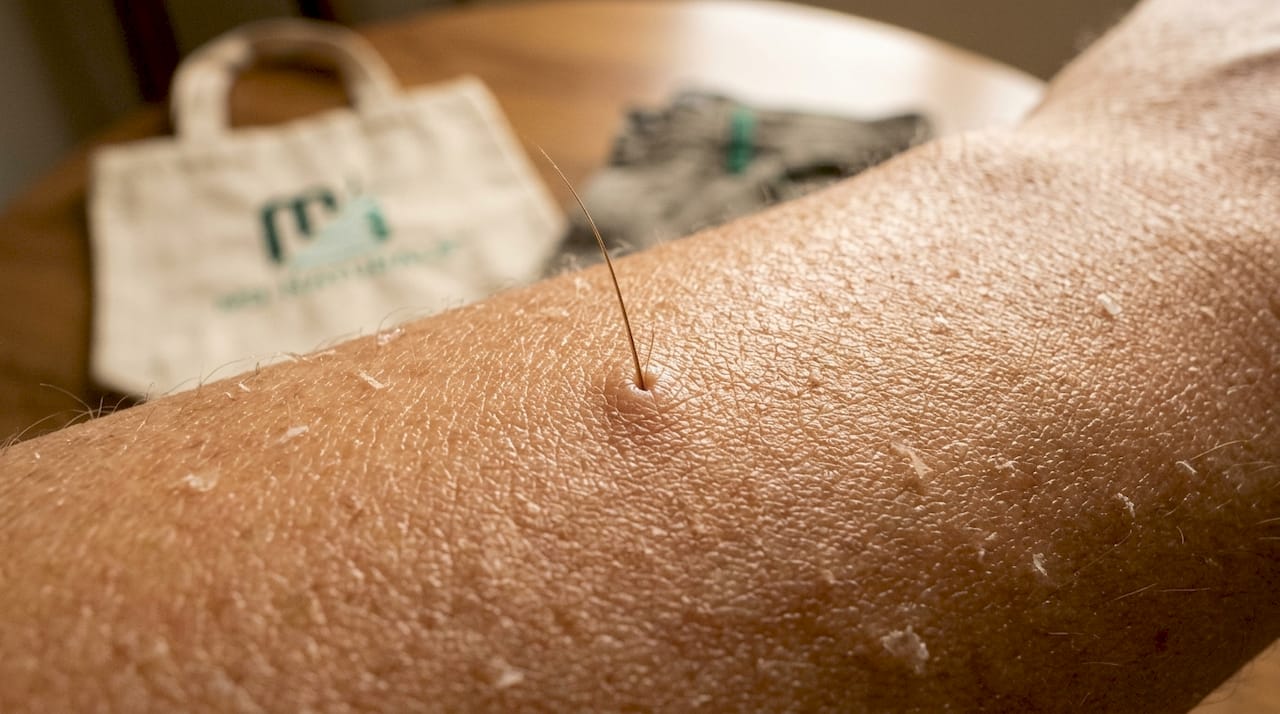
Body scrubs interrupt this process by abrading the outer layer of skin during application. The granular particles in a scrub, whether sugar, salt, coffee, or walnut shell, physically dislodge the dead cell buildup sitting over the follicle opening. Once that barrier is removed, the hair has a clear path to grow outward. Effective exfoliation reduces follicle blockage that traps hair, allowing it to grow in the correct direction.
Shaving technique also plays a role. Multi-blade razors cut hair too close, leaving sharp tips that can pierce the follicle wall as the hair regrows. Regular scrubbing before and after hair removal keeps the skin surface smooth and the follicle opening clear, reducing the chance of that sharp tip finding its way back into the skin.
- Dead skin buildup is the primary physical cause of follicle blockage.
- Scrub particles mechanically lift and remove that buildup from the skin surface.
- Clearing the follicle opening allows hair to exit without curling inward.
- Consistent use prevents the cycle of buildup and entrapment from restarting.
Pro Tip: Focus scrubbing on areas most prone to ingrowns, such as the bikini line, underarms, and legs, rather than applying the same pressure across your entire body.
Physical vs. chemical exfoliation: which works better?
Body scrubs are a form of physical exfoliation. They work on the surface of the skin, removing dead cells through friction. Chemical exfoliants work differently. They dissolve the bonds holding dead cells together, allowing them to shed without mechanical force.
The key distinction is depth. Physical scrubs clean the surface well, but they cannot penetrate the follicle lining. Salicylic acid (BHA) penetrates oily follicle channels to exfoliate inside the pore itself. That makes it particularly effective for people with chronic ingrown hairs, where the blockage sits deeper than a scrub can reach.
| Exfoliation type | How it works | Best for | Limitation |
|---|---|---|---|
| Physical scrub | Abrasion removes surface dead cells | Routine maintenance, pre-shave prep | Cannot reach inside follicle lining |
| Chemical (AHA) | Dissolves dead cell bonds on surface | Dry or sensitive skin | Less effective on oily follicles |
| Chemical (BHA/salicylic acid) | Penetrates follicle to clear congestion | Oily skin, chronic ingrowns | Can cause dryness if overused |
| Combined approach | Surface and follicle-level clearing | Most skin types | Requires careful frequency management |
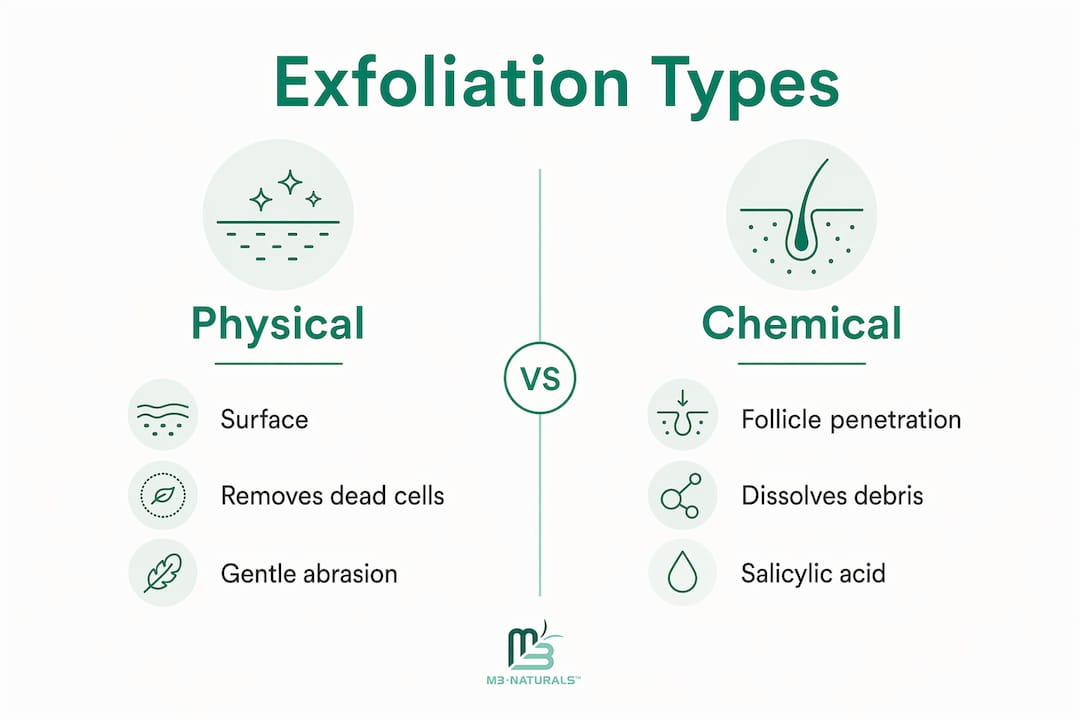
Chemical exfoliants like salicylic acid work inside the follicle in a way that physical scrubs simply cannot replicate. That does not make scrubs ineffective. It means scrubs and chemical exfoliants solve different parts of the same problem.
A balanced routine using both types consistently outperforms relying on either method alone. Use a body scrub two to three times per week for surface maintenance, and apply a salicylic acid product on alternate days to address follicle-level congestion.
Pro Tip: Apply a salicylic acid toner or body lotion on the days you skip scrubbing. This keeps chemical exfoliation working between sessions without stacking both methods on the same day.
How to use body scrubs to prevent ingrown hairs
Technique matters as much as product choice. Applying a scrub too aggressively or too often does more harm than good. The goal is to clear the follicle opening without stripping the skin barrier.
- Wet the skin thoroughly before applying. Damp skin softens the outer layer, making exfoliation more effective and less abrasive. Dry scrubbing increases friction and raises the risk of micro-tears.
- Use gentle circular motions. Circular motions on damp skin distribute pressure evenly and lift dead cells without dragging the skin. Avoid scrubbing in one direction only, which can push debris into follicles rather than away from them.
- Limit sessions to 2–3 times per week. This frequency maintains clear follicles without triggering inflammation. Daily scrubbing disrupts the skin barrier and can worsen ingrown hairs over time.
- Exfoliate before shaving, not after. Pre-shave exfoliation smoothes the skin surface, allowing the razor to cut hairs cleanly and at a consistent angle. This directly lowers the risk of sharp hair tips curling back into the follicle.
- Moisturize immediately after rinsing. Exfoliation temporarily increases skin permeability. Applying a lightweight, non-comedogenic moisturizer right after locks in hydration and supports barrier recovery.
The body scrub application technique you use determines how much debris you actually remove. Light, consistent pressure beats aggressive scrubbing every time.
Pro Tip: Wait at least 24 hours after waxing before using a body scrub. Freshly waxed skin is more sensitive, and scrubbing too soon can cause redness and irritation.
What are the risks of relying only on body scrubs?
Body scrubs are effective, but they have real limitations. Knowing those limits helps you build a routine that actually works rather than one that creates new problems.
- Over-scrubbing causes inflammation. Too-rough or too-frequent physical exfoliation damages the skin barrier, triggering the same redness and irritation that ingrown hairs cause. More scrubbing does not mean faster results.
- Oil-based scrubs can clog pores. Many body scrubs contain oils that leave residue if not rinsed thoroughly. That residue can block the very follicles you are trying to clear. Choose lighter, non-comedogenic formulas for ingrown-prone areas.
- Mechanical scrubbing can push debris deeper. Physical scrubs alone should not be the only treatment for chronic ingrown hairs. Aggressive scrubbing can compress debris into the follicle rather than lifting it away.
- Chronic ingrowns need more than surface treatment. Persistent ingrown hairs often involve follicle inflammation that a scrub cannot address. In those cases, a dermatologist may recommend prescription retinoids, antibiotics, or laser hair removal.
- Shaving habits still matter. Exfoliation reduces the risk of ingrowns but does not cancel out poor shaving technique. Using a dull razor, shaving against the grain, or skipping shaving cream all contribute to ingrown formation regardless of how often you scrub.
The most effective approach treats exfoliation as one part of a complete routine, not the entire solution. Pair your scrub with good shaving habits, chemical exfoliants, and consistent moisturizing for the best results.
Key Takeaways
Body scrubs reduce ingrown hairs by clearing dead skin from follicle openings, but combining physical and chemical exfoliation with proper shaving habits delivers the most reliable prevention.
| Point | Details |
|---|---|
| Scrubs clear follicle openings | Physical exfoliation removes dead skin that traps hair, allowing it to grow outward. |
| Chemical exfoliants go deeper | Salicylic acid penetrates follicle linings where scrubs cannot reach. |
| Technique and frequency matter | Use gentle circular motions on damp skin 2–3 times per week to avoid barrier damage. |
| Exfoliate before shaving | Pre-shave scrubbing smoothes skin and reduces the risk of sharp hair tips curling inward. |
| Chronic ingrowns need more | Persistent cases require chemical exfoliants, better shaving habits, or professional treatment. |
The routine shift that actually changed my skin
Most people I talk to treat body scrubs like a luxury, something they use when they feel like it. That inconsistency is exactly why they do not see results. The skin’s cell turnover cycle runs on a schedule. Exfoliating randomly does not match that rhythm, and follicles stay partially blocked between sessions.
What changed things for me was treating the scrub like a shaving step, not a spa treat. I started using it every time before I shaved, without exception. Within a few weeks, the ingrown bumps on my legs and bikini line dropped noticeably. The improvement in skin texture was a side effect I had not expected.
The other mistake I see constantly is people scrubbing harder when they see an active ingrown. That is the wrong move. An active ingrown is already inflamed. Scrubbing it aggressively pushes debris deeper and prolongs healing. Gentle exfoliation around the area, combined with a salicylic acid product, is the correct response.
The myth I want to retire is that body scrubs alone are enough for people with chronic ingrown hairs. They are not. They are a strong foundation, but the follicle-level work requires a chemical exfoliant. Think of the scrub as clearing the road and salicylic acid as fixing the drainage system underneath. You need both.
Patience is the part nobody wants to hear. Skin cell turnover takes roughly four weeks. Give any new routine at least that long before judging results.
— SuperNatural
M3naturals body scrubs for ingrown hair prevention
Choosing the right scrub formula makes a real difference in how well your routine works. The best options for ingrown-prone skin use natural exfoliating particles like sugar or coffee, which are firm enough to clear dead skin without causing micro-tears, and include skin-nourishing ingredients that support barrier recovery after each session.

M3naturals offers a full range of natural body scrubs formulated with ethically sourced ingredients like coconut oil, charcoal, and botanical extracts. The Brazilian Body Scrub is a standout option for people dealing with ingrown hairs, delivering effective exfoliation without the harsh residue that clogs follicles. For a complete skin care routine, M3naturals also carries complementary body care products that support hydration and skin health between scrubbing sessions.
FAQ
Why do body scrubs help with ingrown hairs?
Body scrubs physically remove dead skin cells that block hair follicles, allowing hairs to grow outward instead of curling back into the skin. Clearing the follicle opening is the most direct way to prevent ingrown hair formation.
How often should I use a body scrub to prevent ingrown hairs?
Use a body scrub 2–3 times per week on damp skin using gentle circular motions. More frequent use can damage the skin barrier and worsen inflammation around existing ingrowns.
Should I scrub before or after shaving?
Exfoliate before shaving. Pre-shave exfoliation smoothes the skin and allows the razor to cut hairs at a clean angle, which reduces the chance of sharp hair tips growing back into the follicle.
Can a body scrub treat an active ingrown hair?
A body scrub can gently loosen the skin over a shallow ingrown, but scrubbing an inflamed ingrown aggressively makes it worse. Use light pressure around the area and pair it with a salicylic acid product for better results.
Are body scrubs enough to stop ingrown hairs completely?
Physical scrubs alone are not sufficient for chronic ingrown hairs. Combining a body scrub with a chemical exfoliant like salicylic acid and good shaving habits gives the most complete prevention.