

Preventive skincare is defined as the daily practice of protecting and maintaining healthy skin to stop damage and visible aging before it starts. Unlike reactive treatments that address existing problems, this proactive approach relies on consistent habits like broad-spectrum SPF 30+ sunscreen, antioxidant use, and barrier-supporting moisturizers. Dermatological guidance consistently points to prevention as more effective and less costly than correction. Understanding what is preventive skincare explained in practical terms gives you the foundation to build a routine that works for your skin now and decades from now.
What are the core components of a preventive skincare routine?
A preventive skincare routine is built on four non-negotiable pillars: cleansing, moisturizing, sun protection, and targeted actives. Each one addresses a specific threat to long-term skin health. Skip any of them consistently, and the others underperform.
Daily cleansing removes pollutants, excess sebum, and surface debris that degrade the skin barrier over time. A compromised barrier lets moisture escape and irritants in, accelerating the aging process. Gentle, pH-balanced cleansers preserve the acid mantle while clearing the skin effectively. Maintaining skin barrier health through proper cleansing is one of the most underrated steps in any routine.

Moisturizing is not optional for any skin type. Barrier-repair moisturizers significantly improve hydration and quality of life after four weeks of consistent use. That four-week window aligns with the skin’s natural renewal cycle, which means results require patience, not product-switching.
Sunscreen is the single most powerful preventive tool available. Up to 80% of visible facial aging comes from external factors like UV exposure rather than intrinsic aging alone. That statistic reframes the entire conversation: most wrinkles and hyperpigmentation are preventable. Daily broad-spectrum SPF 30+ sunscreen blocks the UVA and UVB rays responsible for photoaging and skin cancer. Physical sunblocks are preferred for long-term use because many chemical sunscreens cause skin irritation and inflammation over time.
Targeted actives complete the routine. Vitamin C is the most studied antioxidant for defending against everyday environmental stress and UV-related free radical damage. Retinol, considered a gold standard ingredient for skin longevity, improves texture and fine lines with consistent use.
- Gentle, pH-balanced cleanser morning and night
- Barrier-repair moisturizer applied twice daily
- Broad-spectrum SPF 30+ sunscreen every morning, reapplied every two hours outdoors
- Vitamin C serum in the morning for antioxidant defense
- Retinol or retinoid at night, introduced gradually in your late 20s or early 30s
Pro Tip: Apply your Vitamin C serum before sunscreen in the morning. The antioxidant layer boosts UV protection and reduces oxidative stress from pollution throughout the day.
How does preventive skincare differ from corrective skincare?
Preventive skincare maintains healthy skin before problems appear. Corrective skincare treats existing concerns like deep wrinkles, active acne scarring, or significant hyperpigmentation. The distinction matters because the products, concentrations, and timing involved are fundamentally different.
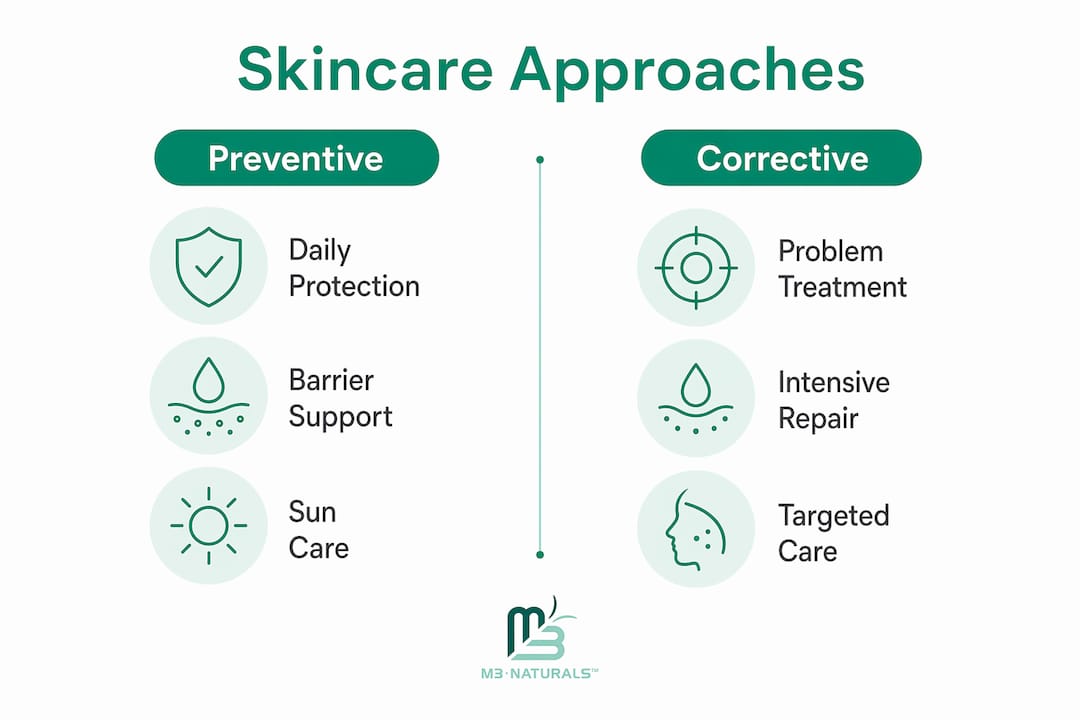
Preventive skincare is more a behavior than a product category. Foundational daily habits cannot be replaced by high-cost corrective treatments applied later. Starting early keeps the skin in a state that requires less aggressive intervention over time.
| Category | Preventive skincare | Corrective skincare |
|---|---|---|
| Goal | Maintain healthy skin, stop future damage | Treat existing skin concerns |
| Product strength | Gentle to moderate actives | Higher concentrations, prescription-grade options |
| Timing | Starts in teens, evolves with age | Begins when a concern is already present |
| Examples | SPF, Vitamin C, retinol, moisturizer | Chemical peels, prescription retinoids, laser treatments |
| Cost over time | Lower, consistent maintenance | Higher, often requires repeated sessions |
Corrective care is not the enemy of prevention. The two work together. A person using corrective treatments for existing sun damage still needs daily SPF to stop new damage from forming. The mistake most people make is waiting until correction is necessary before building any routine at all.
Pro Tip: If you are already using a corrective treatment like a prescription retinoid, you still need the full preventive stack underneath it. Corrective actives work faster and last longer when the barrier is healthy and protected.
When should you start a preventive skincare routine?
The right time to start is earlier than most people expect. Experts recommend beginning basic habits like cleansing and SPF use as early as the teenage years. Skin damage from UV exposure accumulates silently for decades before it becomes visible. Starting protection early reduces that cumulative load significantly.
Here is how a preventive routine evolves across life stages:
- Teens: Start with a gentle cleanser and daily SPF 30+. Keep the routine simple. The goal is habit formation and UV protection, not anti-aging actives.
- Early 20s: Add a lightweight moisturizer and a Vitamin C serum. Skin is still resilient, but environmental exposure is building up daily.
- Late 20s to early 30s: Introduce retinol at a low concentration two to three nights per week. This is the window dermatologists recommend for starting targeted anti-aging prevention before collagen loss accelerates.
- Mid-30s to 40s: Increase retinol frequency if tolerated. Consider adding peptides or growth factors for collagen support. Adjust moisturizer richness as skin becomes drier.
- 50s and beyond: Prioritize hydration, barrier repair, and SPF. Professional treatments become more valuable at this stage for maintaining texture and tone.
Consistency matters more than complexity at every stage. The skin’s renewal cycle takes about four weeks, so any new routine needs at least that long before you can fairly evaluate it. Switching products every two weeks is one of the most common and costly mistakes in skincare.
What lifestyle factors enhance preventive skincare results?
Topical products are only one part of the equation. Skin longevity depends on multifactorial approaches, and systemic wellness including sleep, nutrition, and immune health significantly affects how skin looks and ages. Products underperform when the body’s internal environment is neglected.
Sleep is when the skin repairs itself. Chronic poor sleep elevates cortisol, which breaks down collagen and impairs barrier function. Seven to nine hours of quality sleep per night is not a luxury for skin health. It is a requirement.
Nutrition directly affects skin structure. Diets rich in antioxidants from vegetables, healthy fats from sources like avocado and olive oil, and adequate protein support collagen synthesis and reduce inflammation. Sugar and refined carbohydrates, by contrast, accelerate glycation, a process that stiffens and yellows collagen fibers.
Professional treatments add a layer of prevention that topical products cannot replicate. Regular professional skincare treatments remove dead skin cells, boost circulation, and create a skin reset that improves product absorption and collagen turnover. Monthly treatments align with the 4–6 week skin renewal cycle, maintaining smoother texture and even tone over time. This is why a consistent facial schedule produces compounding results rather than one-off improvements.
- Prioritize 7–9 hours of sleep to support overnight skin repair
- Eat antioxidant-rich foods like berries, leafy greens, and nuts daily
- Manage stress through exercise, meditation, or structured downtime to lower cortisol
- Stay hydrated; water supports skin plumpness and barrier function
- Schedule professional facials or exfoliation treatments monthly to align with the skin renewal cycle
Pro Tip: Think of your holistic skincare approach as a system. When sleep, nutrition, and topical care work together, each one amplifies the others. When one is missing, the whole system loses efficiency.
Key Takeaways
Preventive skincare is the most cost-effective and evidence-backed strategy for maintaining healthy, youthful skin across every decade of life.
| Point | Details |
|---|---|
| Start early with basics | Begin cleansing and SPF use in your teens to reduce cumulative UV damage before it becomes visible. |
| Sunscreen is non-negotiable | Up to 80% of visible facial aging comes from UV exposure, making daily SPF 30+ the highest-impact preventive step. |
| Add actives progressively | Introduce Vitamin C in your early 20s and retinol in your late 20s to build collagen support before loss accelerates. |
| Allow four weeks minimum | The skin renewal cycle takes about four weeks, so evaluate any new routine after at least one full cycle. |
| Lifestyle amplifies products | Sleep, nutrition, and stress management directly affect skin barrier function and how well topical products perform. |
The honest truth about preventive skincare most people miss
Most people treat skincare like a fire extinguisher. They ignore it until something is burning. I understand the logic. Visible results feel more motivating than invisible prevention. But after years of paying close attention to how skin actually ages, the pattern is clear: the people who look the best in their 50s and 60s are almost always the ones who started boring, consistent habits in their 20s and 30s.
The biggest mistake I see is over-investing in expensive corrective products while skipping the basics. A $200 serum applied over a compromised barrier, without sunscreen, in someone who sleeps five hours a night, will not deliver what it promises. The basics are not glamorous, but they are where the real results live.
I also think the beauty industry creates unnecessary anxiety about aging. Preventive skincare is not about stopping time. It is about giving your skin the conditions it needs to function well for as long as possible. That means SPF every day, a moisturizer that works for your skin type, a retinol you actually tolerate, and enough sleep to let repair happen. Add professional treatments when you can. Eat well. Manage stress where possible. The routine does not need to be elaborate. It needs to be consistent.
For anyone considering age-defying approaches beyond daily skincare, a spring makeup and skincare guide for women 40+ offers practical complementary strategies worth exploring.
— SuperNatural
Natural skincare products that support your preventive routine
Building a preventive routine works best when the products you use are free from unnecessary irritants and made with ingredients your skin can actually use.

M3naturals offers a curated natural skincare collection built around ethically sourced botanicals like coconut oil, turmeric, charcoal, and lavender. These ingredients support hydration, barrier health, and gentle exfoliation without the synthetic additives that can undermine long-term skin health. For people who want to incorporate regular exfoliation as part of their preventive routine, M3naturals natural body scrubs are formulated to support the skin renewal cycle without stripping the barrier. Every product in the range is designed for people who take their skin health seriously and want results without compromising on ingredient quality.
FAQ
What is preventive skincare?
Preventive skincare is the practice of protecting and maintaining healthy skin daily to stop damage and premature aging before they occur. It relies on consistent habits like SPF use, cleansing, moisturizing, and targeted actives rather than reactive treatments.
How early should you start a preventive skincare routine?
Experts recommend starting basic habits like cleansing and daily SPF as early as the teenage years. More targeted steps like antioxidants and retinoids are advised beginning in the late 20s to early 30s.
How long does it take to see results from preventive skincare?
The skin’s renewal cycle takes about four weeks, which is the minimum timeframe to observe benefits from a consistent routine. Switching products before that window closes prevents you from seeing accurate results.
Is sunscreen really the most important preventive skincare step?
Yes. Up to 80% of visible facial aging is caused by UV exposure rather than intrinsic aging, making daily broad-spectrum SPF 30+ sunscreen the single highest-impact step in any preventive routine.
Can lifestyle changes improve preventive skincare results?
Skin longevity depends on multifactorial approaches, and systemic factors like sleep quality, nutrition, and stress management directly affect barrier function and how well topical products perform.