

Omega fatty acids are essential nutrients that directly regulate skin barrier function, inflammation, and hydration at the cellular level. The role of omega fatty acids in skin health centers on three types: EPA (eicosapentaenoic acid), DHA (docosahexaenoic acid), and ALA (alpha-linolenic acid). EPA and DHA drive the most significant skin benefits, while ALA, found in plant sources, requires conversion by the body before it becomes active. Dermatological research consistently links adequate omega-3 intake to reduced inflammatory skin conditions, stronger moisture retention, and better protection against UV damage. Getting the omega-6 to omega-3 ratio right matters as much as total intake.
How do omega-3 fatty acids affect skin at the cellular level?
EPA and DHA physically incorporate into skin cell membranes, changing how those cells communicate and respond to stress. This is not a surface-level effect. When EPA and DHA become part of the membrane’s phospholipid layer, they alter fluidity and receptor signaling, which changes the entire inflammatory cascade downstream.
The key competition happens between EPA and arachidonic acid. Arachidonic acid is an omega-6 fatty acid that produces pro-inflammatory eicosanoids when the body processes it. EPA displaces arachidonic acid in skin cells, shifting chemical signals away from inflammation and toward resolution. That shift is what makes omega-3s therapeutically relevant for chronic skin conditions, not just general wellness.
EPA and DHA also trigger the production of specialized pro-resolving mediators, specifically resolvins and protectins. These compounds do not simply suppress inflammation. They actively terminate it. EPA and DHA block pro-inflammatory NF-κB pathways and activate anti-inflammatory receptors like PPARγ, which helps the skin return to a calm baseline faster after a trigger.
EPA and DHA play slightly different roles. EPA is the primary modulator of the arachidonic acid competition. DHA contributes more to membrane structure and the production of protectins. Both are necessary for full therapeutic effect.
- EPA reduces the production of inflammatory prostaglandins and leukotrienes
- DHA supports membrane integrity and produces neuroprotectin D1, which protects skin cells from oxidative stress
- Resolvins (derived from both EPA and DHA) actively clear inflammatory debris from skin tissue
- Protectins limit the spread of inflammatory signals to surrounding cells
Pro Tip: If you take an omega-3 supplement, look for one that lists EPA and DHA content separately on the label. A product with 1,000 mg of fish oil but only 100 mg of combined EPA and DHA delivers far less therapeutic value than one with 600 mg EPA and 400 mg DHA per capsule.
What skin conditions benefit from omega fatty acids?

The benefits of omega fatty acids for skin are best documented across five conditions: psoriasis, atopic dermatitis, acne, dry skin, and UV-induced damage. The evidence is not uniform across all five, but the overall picture is strong.
Omega-3 supplementation supports barrier integrity and reduces transepidermal water loss, which is the rate at which water evaporates through the skin. Lower transepidermal water loss means better hydration retention. This mechanism benefits both dry skin and inflammatory conditions where the barrier is compromised.
For psoriasis and atopic dermatitis, clinical reviews show that omega-3 supplementation can reduce symptom severity. The anti-inflammatory mechanism is the primary driver. In atopic dermatitis, where the skin barrier is structurally deficient, omega-3s support both the inflammatory and structural sides of the problem.
Acne results are more mixed. Omega-3s reduce the inflammatory component of acne, which can decrease redness and lesion severity. However, the evidence is not as consistent as it is for psoriasis or atopic dermatitis. Sun protection is one of the more surprising findings. Consuming 4 grams of fish oil daily for 3 months increases skin resistance to sunburn by improving the barrier and modulating the UV inflammatory response. That is a meaningful protective effect from a dietary change alone.
| Skin Condition | Evidence Strength | Primary Mechanism |
|---|---|---|
| Psoriasis | Strong | Reduced inflammatory eicosanoids |
| Atopic dermatitis | Strong | Barrier support and inflammation reduction |
| Dry skin | Strong | Reduced transepidermal water loss |
| Acne | Moderate | Reduced inflammatory lesions |
| UV damage | Moderate | Barrier strengthening and UV response modulation |
Omega-3s can also hasten wound healing by reducing the inflammatory response to trauma. This benefit is promising for chronic wound care and post-procedure skin repair, though more clinical research is needed to establish standard protocols.
Marine vs. plant-based omega-3s: which works better for skin?
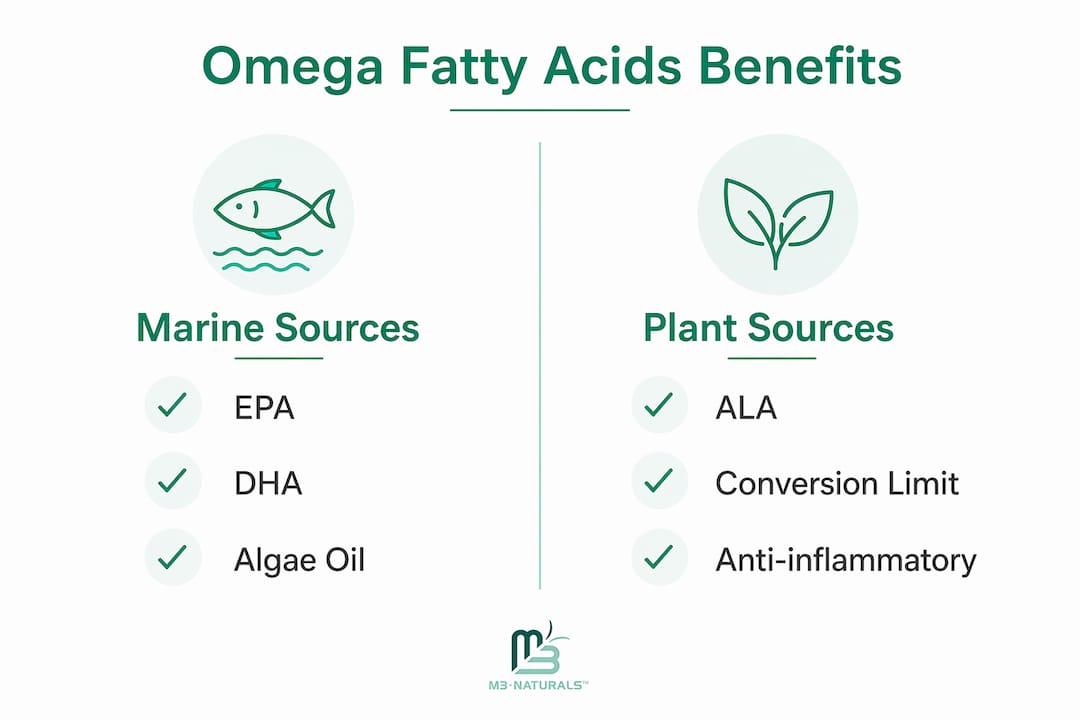
The source of your omega-3s matters more than most people realize. Marine-derived omega-3s have superior skin benefits compared to plant-based ALA because the body converts ALA to EPA and DHA inefficiently. The conversion rate is low enough that relying on flaxseed or chia seeds alone will not deliver the EPA and DHA concentrations needed for therapeutic skin effects.
Marine sources, including fatty fish like salmon and mackerel, krill oil, and algae-based supplements provide EPA and DHA in their active forms. The body can use them immediately without conversion. Algae-based omega-3 supplements are worth noting specifically because they are the original source of EPA and DHA in the marine food chain. Fish accumulate these fatty acids by eating algae. Algae supplements give you the same active compounds without the fish, which matters for people who follow plant-based diets.
Pro Tip: If you avoid fish for dietary or ethical reasons, algae-based omega-3 supplements are the most direct plant-derived source of EPA and DHA. Look for products that list EPA and DHA content specifically, not just “algae oil.” For more on how ingredient sourcing affects product quality, the ethically sourced skincare guide from M3naturals covers this in detail.
ALA from plant sources is not useless. It contributes to overall fatty acid intake and has its own anti-inflammatory properties. The issue is that it cannot substitute for EPA and DHA when the goal is measurable skin improvement. People who eat a plant-based diet and want skin benefits from omega-3s should prioritize algae-based supplements over flaxseed oil.
How to incorporate omega fatty acids into your skincare routine and diet
Getting omega fatty acids into your skin requires both dietary and topical strategies. Neither approach alone is as effective as combining them.
-
Prioritize dietary EPA and DHA first. Eat fatty fish like salmon, sardines, or mackerel two to three times per week. If you supplement, choose a product with clearly labeled EPA and DHA amounts rather than just total fish oil weight.
-
Balance your omega-6 to omega-3 ratio. The typical Western diet is heavily skewed toward omega-6 fatty acids from vegetable oils and processed foods. That excess omega-6 promotes the same inflammatory pathways that omega-3s work to suppress. Reducing processed food intake while increasing omega-3 sources shifts the ratio in the right direction.
-
Take supplements with a fat-containing meal. Omega-3 supplements taken with fat-containing meals absorb significantly better because they are fat-soluble. Taking them on an empty stomach reduces how much your body actually uses.
-
Consider the Mediterranean diet as a framework. Omega-3s are most effective within an anti-inflammatory dietary pattern like the Mediterranean diet rather than as isolated supplements. Olive oil, vegetables, legumes, and fish together create a dietary environment where omega-3s can do their best work.
-
Add topical omega-rich products. Topical application of omega fatty acids, particularly through oils containing linoleic acid and oleic acid, supports the skin barrier from the outside. Body oils and scrubs formulated with plant-based carrier oils deliver fatty acids directly to the skin surface, complementing dietary intake. Skin barrier health is also affected by external factors like water quality, which is worth factoring into your overall routine.
-
Be consistent. Skin cell turnover takes weeks. Noticeable changes in hydration and inflammation from omega-3 supplementation typically require at least 8–12 weeks of consistent intake.
What precautions should you know about omega fatty acids and skin?
Omega fatty acids are not a universal fix for every skin concern. Understanding their limits helps you use them more effectively.
- Acne can worsen in some people. Some acne patients report worsening symptoms with fish oil supplements, which suggests individual response varies. If you have acne-prone skin, introduce omega-3 supplements gradually and monitor your skin over 4–6 weeks.
- Supplement quality varies widely. Fish oil supplements can oxidize during manufacturing or storage, producing compounds that may actually promote inflammation. Choose products that are third-party tested for oxidation levels and stored in dark, cool conditions.
- Omega-3s do not replace medical treatment. For conditions like severe psoriasis or atopic dermatitis, omega-3 supplementation supports but does not replace prescribed therapies. Use them as part of a broader approach, not as a standalone solution.
- Dietary context matters. Taking omega-3 supplements while eating a diet high in processed omega-6 oils limits their effectiveness. The ratio between the two types determines the net inflammatory effect.
- Consult a healthcare provider before high-dose supplementation. Doses above 3 grams per day of EPA and DHA can affect blood clotting and interact with certain medications.
Key takeaways
Omega fatty acids improve skin health by resolving inflammation at the cellular level, strengthening the barrier, and reducing water loss, with marine-derived EPA and DHA delivering the most direct and measurable benefits.
| Point | Details |
|---|---|
| EPA and DHA are the active forms | Plant-based ALA converts inefficiently; prioritize marine or algae sources for skin benefits. |
| Barrier and hydration benefits are well-supported | Omega-3s reduce transepidermal water loss, improving hydration in dry and inflamed skin. |
| Take supplements with food | Fat-soluble omega-3s absorb better when taken with a fat-containing meal. |
| Dietary context amplifies results | A Mediterranean-style diet creates the anti-inflammatory environment where omega-3s work best. |
| Individual response varies | Monitor acne-prone skin carefully and consult a clinician before high-dose supplementation. |
What most people miss about omega-3s and skin
The conversation around omega-3s and skin almost always focuses on anti-inflammation. That framing is accurate but incomplete. What makes EPA and DHA genuinely different from other anti-inflammatory nutrients is that they do not just suppress inflammation. They produce compounds that actively resolve it. Resolvins and protectins are not blockers. They are cleanup crews. That distinction matters because suppressing inflammation indefinitely has side effects. Resolving it does not.
I have also noticed that people dramatically underestimate how long dietary changes take to show up in skin. Skin cell membranes do not change overnight. The EPA and DHA you eat today need weeks to incorporate into cell membranes in meaningful concentrations. People try omega-3 supplements for two weeks, see no change, and conclude they do not work. The timeline is 8–12 weeks minimum, and results are subtle at first.
The plant versus marine debate is another area where I see consistent confusion. People assume that because flaxseed is “natural,” it delivers the same benefits as fish oil. The biochemistry does not support that assumption. ALA is a precursor, not the active compound. If your goal is measurable skin improvement, algae or fish-derived EPA and DHA are the right tools.
The most effective approach I have seen combines consistent dietary omega-3 intake, a low-omega-6 diet, and topical products that support the skin barrier from the outside. Neither side of that equation alone is as powerful as both together.
— SuperNatural
Natural skin nourishment from M3naturals
Dietary omega-3s build skin health from the inside. Topical care supports it from the outside.

M3naturals formulates its body scrubs and massage oils with ethically sourced botanical ingredients, including coconut oil, lavender, and plant-based extracts that deliver fatty acids directly to the skin surface. These products complement your dietary omega-3 intake by reinforcing the skin barrier and supporting moisture retention at the surface level. The body scrubs exfoliate to improve ingredient absorption, while the massage oils provide sustained nourishment. If you are building a skin health routine that works from both directions, M3naturals products are a practical and natural place to start.
FAQ
What is the role of omega fatty acids in skin health?
Omega fatty acids regulate skin barrier function, reduce inflammation, and improve hydration by incorporating into cell membranes and shifting chemical signaling away from pro-inflammatory pathways. EPA and DHA are the most therapeutically active forms for skin.
How do omega-3s improve skin hydration?
Omega-3 fatty acids reduce transepidermal water loss, which is the rate at which water evaporates through the skin. Lower water loss means the skin retains moisture more effectively, improving softness and reducing dryness.
Are plant-based omega-3s as effective as fish oil for skin?
Plant-based ALA converts to EPA and DHA inefficiently in the body, making marine and algae-derived sources significantly more effective for skin benefits. Algae supplements provide EPA and DHA directly and are a strong option for plant-based diets.
How long does it take for omega-3s to improve skin?
Noticeable skin improvements from omega-3 supplementation typically require 8–12 weeks of consistent intake. Skin cell membranes need time to incorporate EPA and DHA at concentrations that produce visible effects.
Can omega-3 supplements cause skin problems?
Some people with acne-prone skin report worsening breakouts with fish oil supplements. Introduce omega-3s gradually, monitor your skin over 4–6 weeks, and consult a healthcare provider if symptoms worsen or if you plan to take doses above 3 grams of EPA and DHA daily.