
Non-toxic skincare is defined as products formulated without ingredients known or suspected to cause significant harm under normal usage conditions. The term covers a wide spectrum of formulations, from body scrubs to serums, and is used by brands like Acure and those certified by programs such as MADE SAFE and EWG Verified. What makes this category genuinely useful, and genuinely confusing, is that “non-toxic” is not a standardized or regulated term in U.S. cosmetics law. No federal agency enforces a universal safety threshold for the label. Understanding what the phrase actually signals, and what it does not, is the most practical thing you can do before building a safer skincare routine.
What does non-toxic skincare mean, exactly?
Non-toxic skincare, also referred to in the industry as “clean beauty,” describes products that exclude ingredients with documented links to harm, such as carcinogens, endocrine disruptors, and known irritants. The most commonly excluded substances include parabens, sulfates, phthalates, and formaldehyde. Brands that use the label seriously back it up with full ingredient disclosure and, in the strongest cases, third-party certification.
The phrase does not mean “chemical-free.” Every substance on earth, including water and vitamin C, has a chemical composition. What the label is really communicating is a commitment to avoiding specific categories of chemicals that carry meaningful risk at realistic exposure levels. This distinction matters because it shifts the conversation from fear of chemistry to informed ingredient evaluation.
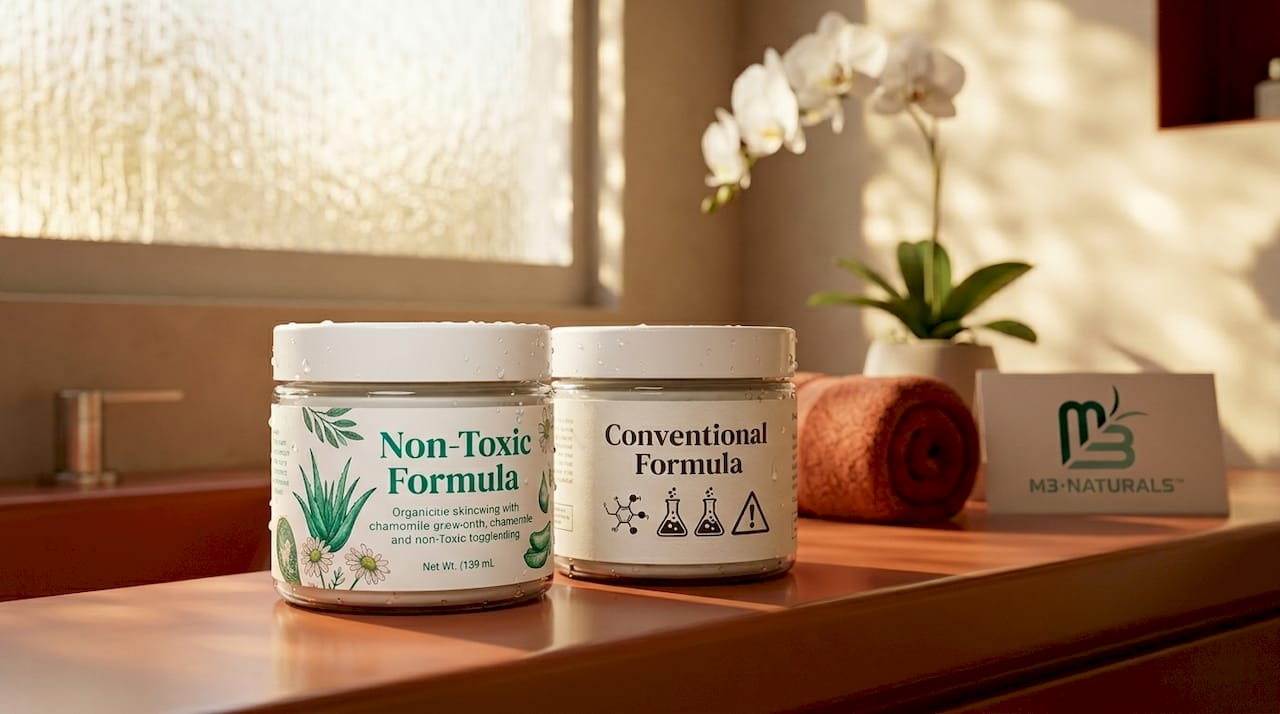
Third-party programs like MADE SAFE and EWG Verified have stepped in to give the term practical meaning. These programs set reproducible ingredient exclusion lists, testing protocols, and safety benchmarks. When a product carries one of these seals, you have a concrete reference point rather than a brand’s self-assessment.
Why “non-toxic” has no legal definition and what that means for you
The absence of a legal standard is the single most important fact to understand about non-toxic beauty standards. No U.S. federal agency, not the FDA, not the EPA, enforces a definition of “non-toxic” specifically for cosmetics and personal care products.
The FTC’s Green Guides come closest to providing guardrails. Under those guidelines, unsubstantiated “non-toxic” claims are considered deceptive because they imply zero toxicity for both humans and the environment, a standard that is nearly impossible to prove. Brands are required to have competent and reliable scientific evidence before making the claim. The problem is that no specific testing standard or pre-approval process exists, so enforcement is reactive rather than preventive.
This regulatory gap creates real consumer risk. Court cases involving programs like Sephora’s “Clean at Sephora” standard highlight the litigation exposure brands face when their definitions are vague. Vague claims increase both consumer confusion and legal liability. Clear exclusion criteria reduce both.
Here is what this means practically for you as a shopper:
- A product labeled “non-toxic” is making a marketing claim, not a legally verified safety statement.
- The claim is only as strong as the brand’s ingredient transparency and supporting evidence.
- Third-party certification is the most reliable proxy for a genuine standard.
- Dose and exposure duration matter. Toxicology operates on the principle that the dose makes the poison, meaning even beneficial compounds like retinol can cause harm at high concentrations.
- Leave-on products like moisturizers carry higher exposure risk than rinse-off products like body scrubs, so the same ingredient may be acceptable in one format and not another.
Pro Tip: Search a product’s full ingredient list on the EWG Skin Deep database before purchasing. It scores individual ingredients by hazard level and flags data gaps, giving you a more complete picture than any label claim.
Ingredients to avoid and what non-toxic formulas use instead
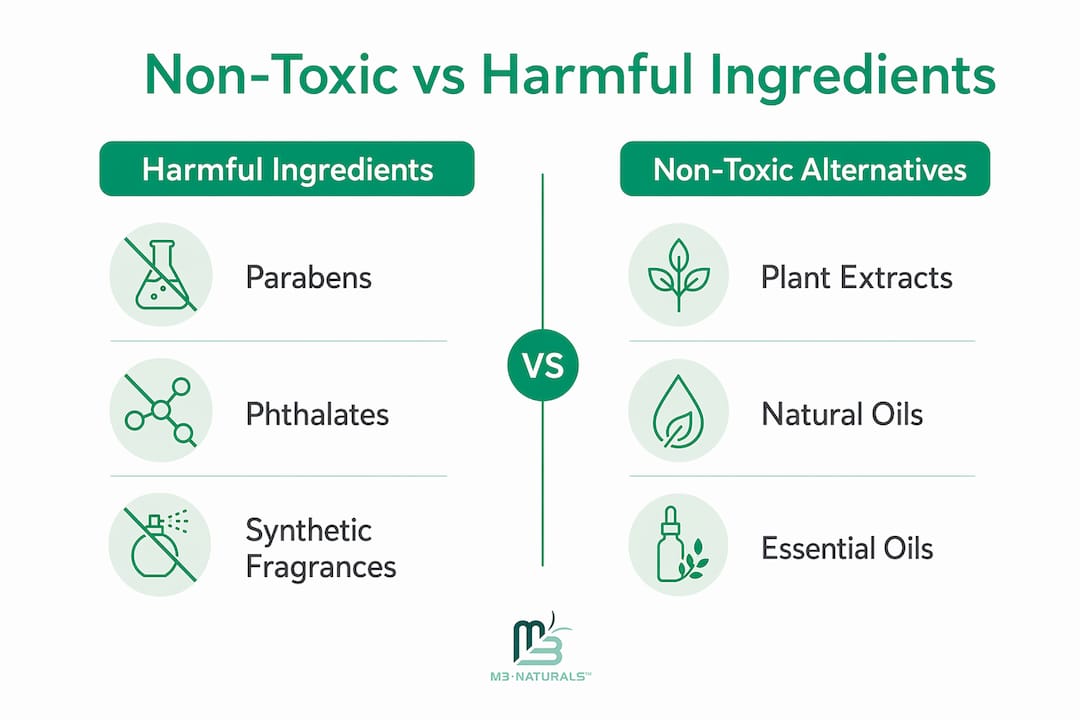
Understanding the ingredient profile of a non-toxic product is where abstract claims become concrete decisions. The most commonly avoided substances in clean beauty formulations fall into a few clear categories: preservatives with endocrine-disrupting potential (parabens), harsh surfactants (sodium lauryl sulfate), plasticizers linked to hormonal interference (phthalates), and preservative-releasing agents that generate formaldehyde.
One counterintuitive point worth knowing: natural does not automatically mean safe. Arsenic is natural. Certain essential oils, including tea tree and lavender, can trigger contact dermatitis in sensitive individuals. Toxicity depends on dose, route, and duration of exposure, not on whether an ingredient came from a plant or a lab. This is why INCI (International Nomenclature of Cosmetic Ingredients) labeling matters. It gives you the standardized name of every ingredient regardless of how the brand markets it.
Here is a comparison of commonly flagged ingredients versus their cleaner alternatives:
| Flagged ingredient | Why it’s avoided | Common non-toxic alternative |
|---|---|---|
| Parabens (methylparaben, propylparaben) | Potential endocrine disruption | Vitamin E (tocopherol), rosemary extract |
| Sodium lauryl sulfate (SLS) | Skin barrier disruption, irritation | Coco-glucoside, decyl glucoside |
| Phthalates (DBP, DEHP) | Hormonal interference | Naturally derived fragrance, essential oils |
| Formaldehyde-releasing preservatives | Known carcinogen | Sodium benzoate, potassium sorbate |
| Synthetic fragrance (parfum) | Undisclosed allergen risk | Named botanical extracts, essential oils |
Key ingredients you will find in genuinely non-toxic formulations include:
- Coconut oil and jojoba oil for moisture without synthetic emollients
- Charcoal for detoxifying properties without harsh surfactants
- Turmeric and botanical extracts for antioxidant activity
- Lavender and other named essential oils used at safe concentrations
- Plant-derived preservatives that meet safety benchmarks
Pro Tip: If a product lists “fragrance” or “parfum” without further detail, that single word can represent dozens of undisclosed chemicals. Look for products that name every scent component individually or use fragrance-free formulations.
How to evaluate non-toxic skincare and spot greenwashing
Greenwashing is the practice of using environmental or safety language to imply benefits a product does not actually deliver. It is widespread in the beauty industry, and vague “non-toxic” claims without supporting evidence are a primary example. Knowing how to evaluate a product critically protects both your skin and your wallet.
Start with the ingredient list. Full disclosure is non-negotiable. If a brand does not publish its complete INCI list, that omission is itself a signal. Reputable brands committed to natural body product standards publish every ingredient and often explain why each one is included.
Next, look for third-party certification. Certification programs fill the regulatory gap by setting ingredient exclusion lists, testing protocols, and safety benchmarks that brands must meet independently. MADE SAFE certifies that a product contains no known harmful ingredients. EWG Verified requires full ingredient disclosure and prohibits ingredients of concern on EWG’s restricted list. These seals are not perfect, but they represent a standard that goes beyond self-reporting.
Consider the product’s use context. A leave-on face cream with a borderline ingredient creates more cumulative exposure than a rinse-off body scrub with the same ingredient. Your skin type and sensitivity level also affect how you respond to any given formula. Someone with a compromised skin barrier absorbs more of what they apply than someone with intact barrier function.
Watch for these greenwashing red flags:
- Claims like “all-natural,” “pure,” or “clean” with no ingredient list or certification
- Ingredient lists that use trade names instead of INCI names
- Certifications from obscure or self-created bodies with no published standards
- Marketing that emphasizes what a product does not contain without explaining what it does contain
Benefits and real limitations of non-toxic skincare products
The core benefit of non-toxic skincare is reduced exposure to chemicals with documented or suspected harm. Consumers may experience fewer sensitivities and lower cumulative exposure to endocrine disruptors when they replace conventional products with cleaner alternatives. For people with reactive skin, eczema, or hormonal sensitivities, this reduction in chemical load can translate directly into fewer flare-ups and less irritation.
The limitations are equally real and worth stating plainly. No product can be guaranteed fully non-toxic because safety depends on product form, usage patterns, dose, and individual factors including skin type and sensitivity. A formula that works perfectly for one person may cause a reaction in another due to a specific botanical extract. The label describes the formulation philosophy, not a guaranteed outcome for every user.
Here is a realistic framework for integrating non-toxic products into your routine:
- Audit your current products using EWG Skin Deep or a similar database to identify your highest-risk items.
- Prioritize replacing leave-on products first, since they create the most cumulative exposure.
- Introduce new products one at a time so you can identify the source of any reaction.
- Pair product choices with good skincare habits: consistent sun protection, adequate hydration, and avoiding over-exfoliation.
- Consult a dermatologist if you have a diagnosed skin condition before switching formulations, since some therapeutic ingredients in conventional products may be necessary for your specific situation.
“Non-toxic” also does not automatically mean environmentally safe. A product can avoid harmful human health ingredients while still using non-biodegradable packaging or unsustainably sourced botanicals. If environmental impact matters to you, look for brands that address both dimensions explicitly.
Key takeaways
Non-toxic skincare reduces exposure to harmful chemicals, but its value depends entirely on ingredient transparency, third-party certification, and realistic expectations about dose and individual response.
| Point | Details |
|---|---|
| No legal definition exists | “Non-toxic” is a marketing claim; no U.S. agency enforces a standard for cosmetics. |
| Dose and exposure determine risk | Even natural ingredients can cause harm at high concentrations or with prolonged use. |
| Third-party certification is the benchmark | MADE SAFE and EWG Verified provide reproducible standards that replace self-reporting. |
| Ingredient transparency is non-negotiable | Full INCI disclosure is the minimum requirement for evaluating any non-toxic claim. |
| Benefits are real but individual | Reduced irritant exposure helps many users, but no formula is risk-free for everyone. |
Why I think the “non-toxic” label is both useful and overused
The phrase does real work when a brand uses it to mean something specific: a defined exclusion list, published ingredient data, and ideally a third-party seal. In that context, it gives you a faster shortcut to safer choices than reading every INCI list from scratch. That is genuinely valuable.
Where it breaks down is when brands use it as a mood rather than a standard. I have seen products labeled “non-toxic” that contain undisclosed fragrance blends and preservative systems with real safety questions. The label was doing marketing work, not safety work. The distinction is not always obvious from the front of the bottle.
What I have found actually works is treating certification as a floor, not a ceiling. A MADE SAFE or EWG Verified seal tells you a product has cleared a meaningful bar. From there, you can look at the herb-infused formulations and botanical ingredient profiles that align with your specific skin needs. The combination of a certified baseline and personal ingredient knowledge is more reliable than any single label.
The toxicology principle worth keeping in mind is that dose makes the poison. A product with a small amount of a borderline ingredient used once a week is a different risk profile than the same ingredient in a daily leave-on product. Context is everything, and the brands worth trusting are the ones that give you enough information to apply that context yourself.
— SuperNatural
Start your non-toxic routine with M3naturals
If you are ready to move from research to results, M3naturals offers a product line built on the principles covered in this article: disclosed botanical ingredients, natural formulations, and spa-quality results without the chemical load of conventional body care.
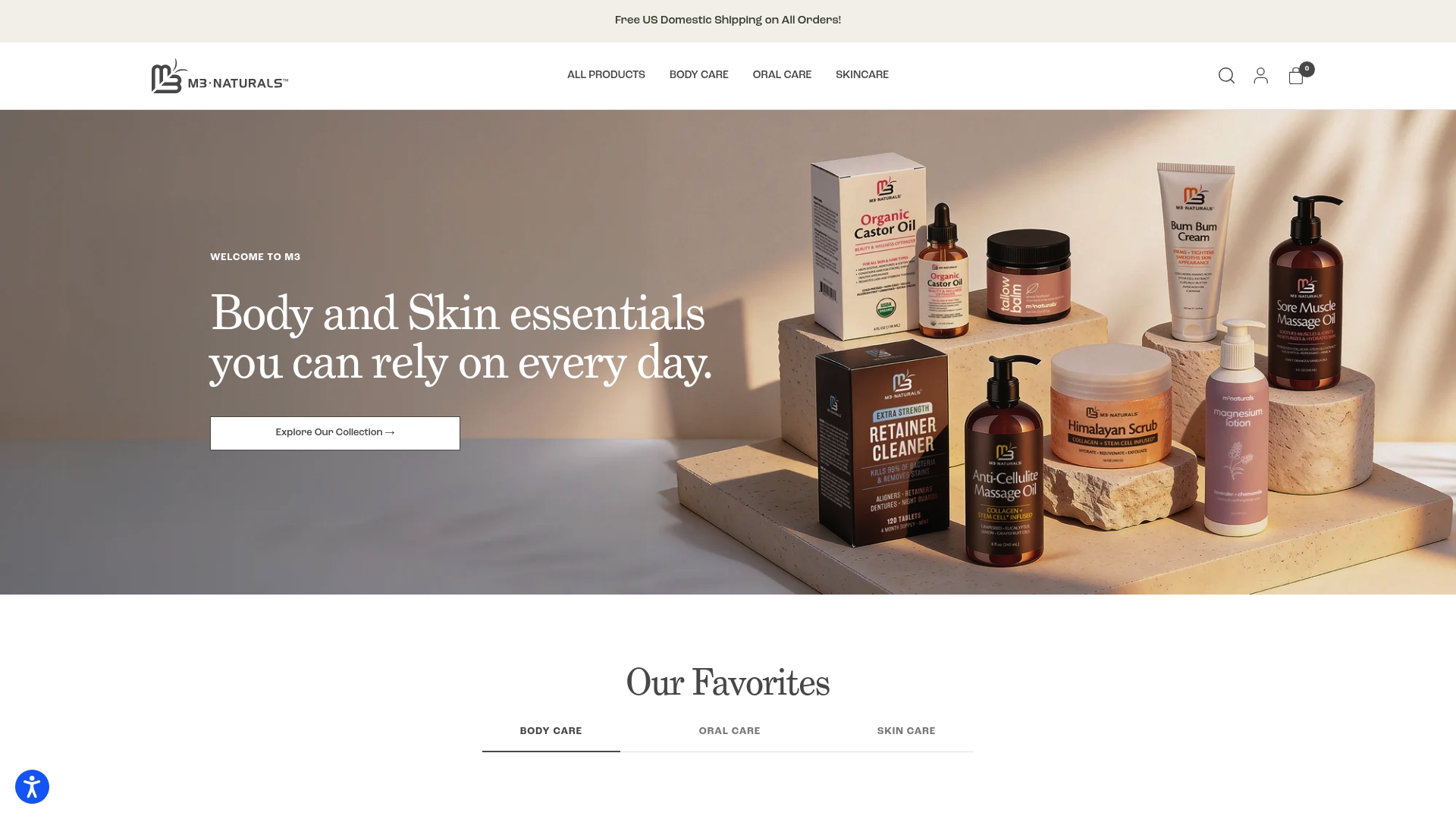
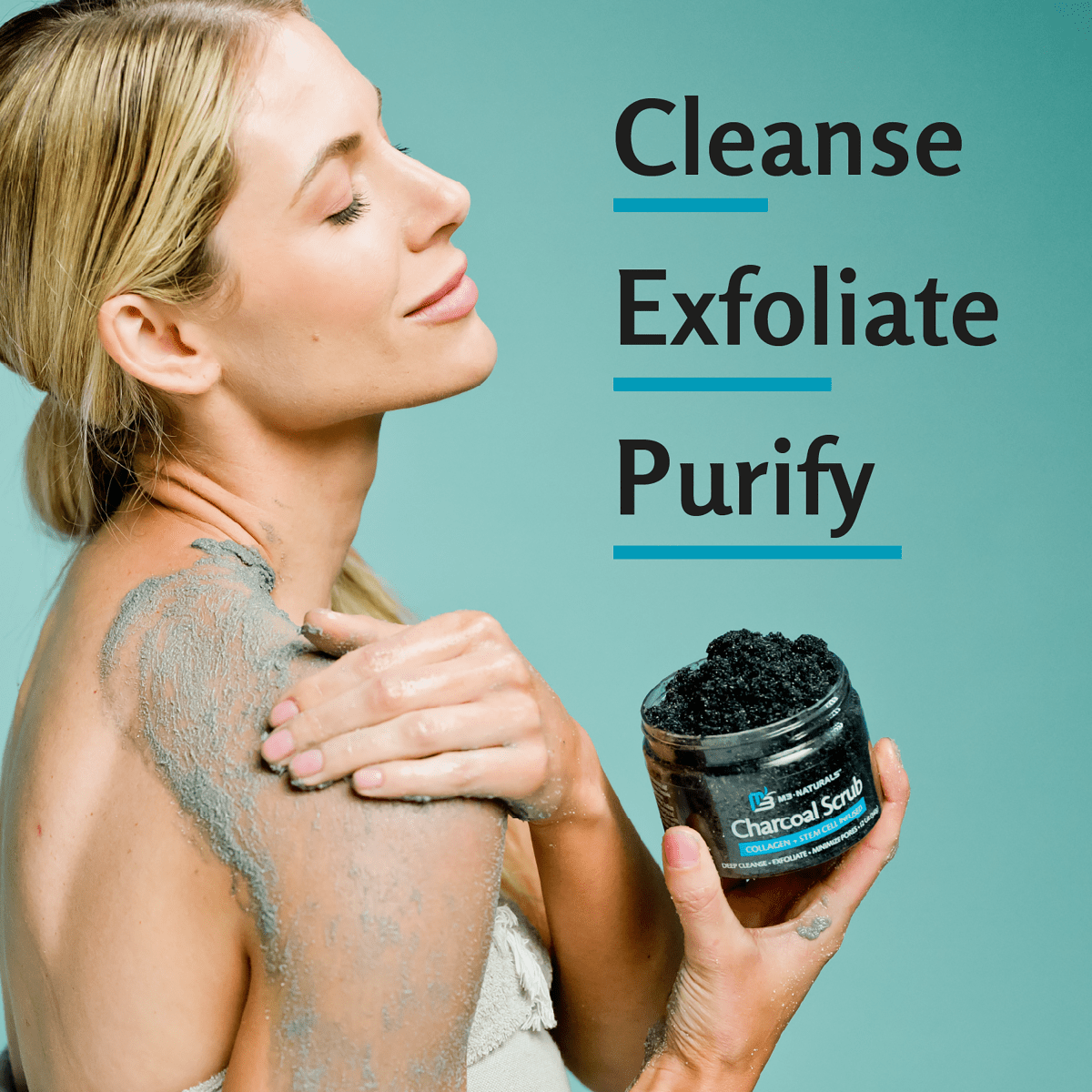
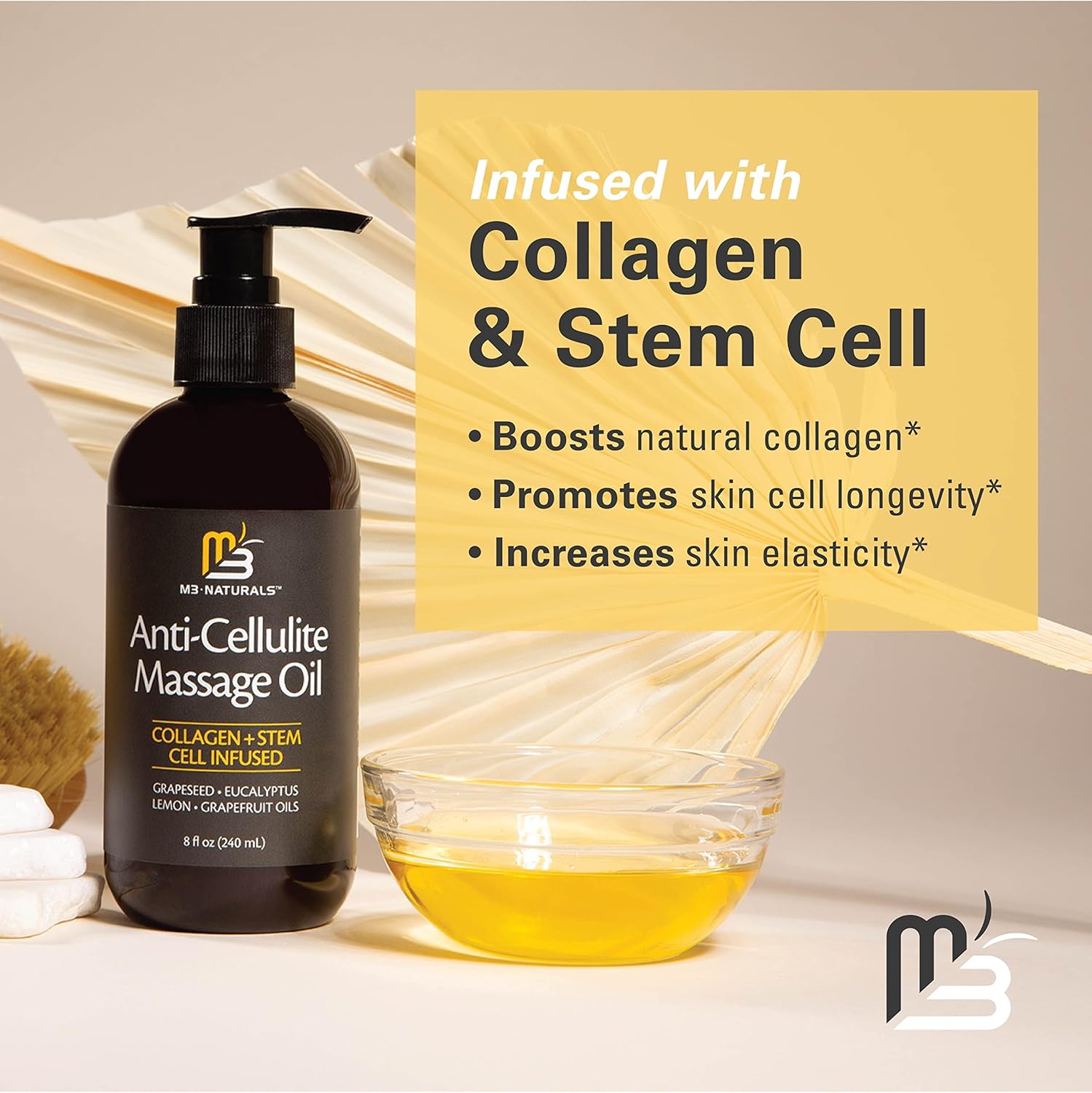
The body scrub collection features formulations with charcoal, coconut oil, and turmeric, ingredients chosen for both efficacy and safety. The massage oil range uses plant-derived oils with named botanical extracts rather than synthetic fragrance blends. Both lines are designed for daily use and are suitable for a range of skin types. Browse the full skincare catalog to find products that match your skin’s specific needs and start building a routine grounded in ingredient transparency.
FAQ
What does non-toxic skincare mean in simple terms?
Non-toxic skincare refers to products formulated without ingredients known to cause significant harm under normal use, such as parabens, phthalates, sulfates, and formaldehyde. The term is a marketing claim with no universal legal definition in the U.S.
Are non-toxic skincare products completely safe for everyone?
No product is guaranteed safe for every individual because safety depends on dose, exposure duration, skin type, and personal sensitivities. A formula free of common harmful chemicals can still cause a reaction in someone with a specific botanical allergy.
How do I identify genuinely non-toxic skincare?
Look for full INCI ingredient disclosure and third-party certifications from programs like MADE SAFE or EWG Verified, which set reproducible safety standards. Avoid products that use vague claims like “clean” or “pure” without publishing a complete ingredient list.
Is “non-toxic” the same as “chemical-free”?
No. Every substance has a chemical composition, so “chemical-free” is scientifically meaningless. Non-toxic skincare avoids specific chemicals with documented harm potential, not all chemistry.
Does non-toxic skincare also mean it is environmentally safe?
Not automatically. A product can exclude harmful human health ingredients while still using non-biodegradable packaging or unsustainably sourced botanicals. Look for brands that address both human safety and environmental impact with equal transparency.