
Most people assume massage oils sit on top of the skin like a coat of wax, doing little more than adding a surface-level sheen. That assumption is wrong, and understanding how massage oils absorb in skin changes everything about how you use them. The skin is a layered, living system with specific pathways designed to interact with lipid-based substances. Once you know those pathways, you can apply oils in ways that genuinely support skin nourishment, hydration, and barrier repair rather than just moisturizing the surface.
Table of Contents
- Understanding the skin’s barrier: How massage oils navigate absorption
- How massage enhances oil absorption and skin benefits
- The role of warming and oil type in absorption effectiveness
- Maximizing benefits: Practical tips for applying massage oils
- What most skincare guides miss about massage oil absorption
- Discover natural massage oils that truly absorb and nourish
- Frequently asked questions
Key Takeaways
| Point | Details |
|---|---|
| Skin barrier role | The stratum corneum’s lipid matrix is the main pathway through which massage oils absorb into skin. |
| Massage benefits | Massage physically disrupts the skin barrier and boosts circulation to enhance oil penetration and skin nutrition. |
| Warming oils | Warming oils improves absorption efficiency by softening skin and increasing blood flow. |
| Oil types matter | Oils similar to skin’s natural sebum absorb faster, while heavier oils provide lasting moisture but slower absorption. |
| Application tips | Apply oils on clean, damp skin using circular strokes for 5-10 minutes to maximize absorption and avoid overuse. |
Understanding the skin’s barrier: How massage oils navigate absorption
Your skin’s outermost layer is called the stratum corneum, and it functions as the body’s primary gatekeeper. The stratum corneum consists of 20 to 30 layers of dead, flattened skin cells called keratinocytes, all packed tightly in a lipid matrix made up of ceramides, cholesterol, and fatty acids. Think of it as a brick wall where the cells are the bricks and the lipids are the mortar. That mortar is exactly what makes massage oil absorption possible.
Oils are lipophilic, meaning they have a natural chemical affinity for fats. This means they don’t try to punch through cells but instead slip into the spaces between them, traveling through the lipid mortar. The technical name for this is the intercellular pathway, and it’s the primary route for most massage oils. Lipophilic substances primarily follow the intercellular pathway through the stratum corneum’s lipid matrix, while the transappendageal route (hair follicles and glands) accounts for only about 0.1% of skin surface.
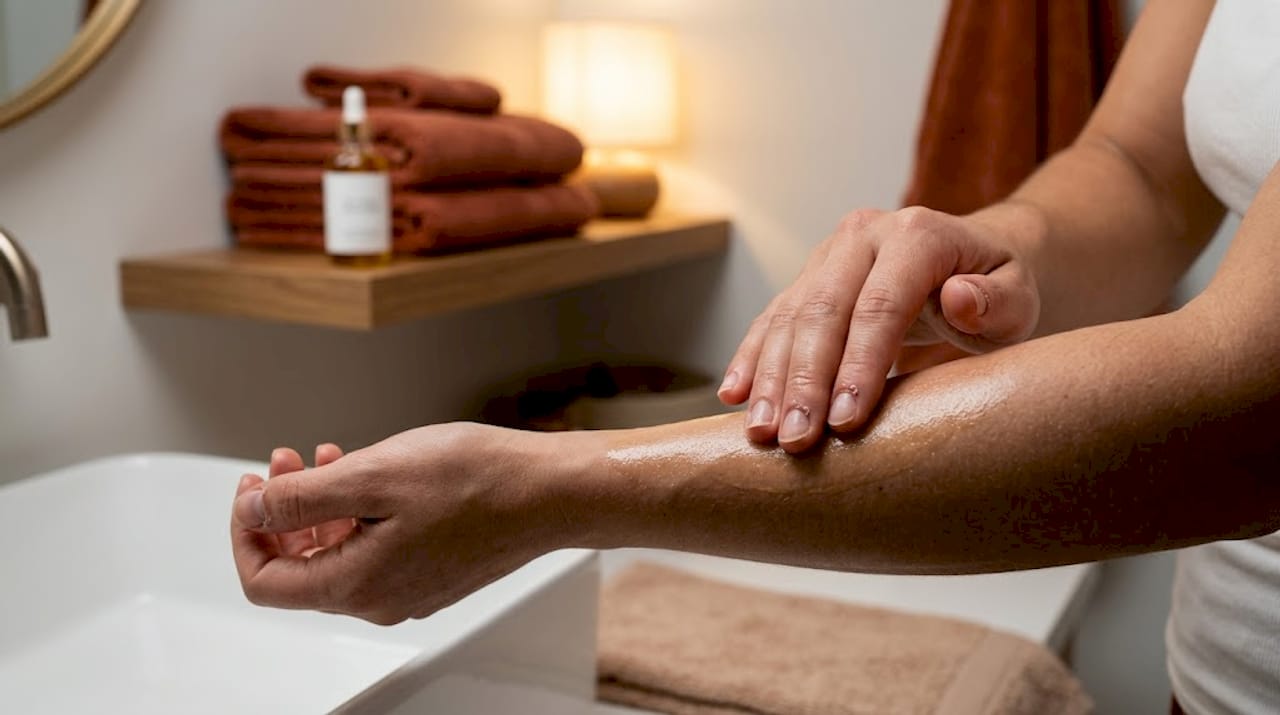
Here’s what that means practically. When you apply a quality oil from the massage oils collection, it begins navigating the intercellular spaces almost immediately. The speed and depth of that navigation depends on the oil’s molecular weight, your skin’s hydration level, and how the oil is applied.
Key pathways massage oils use to absorb:
- Intercellular route: The main highway. Oils move through the lipid matrix between keratinocytes in the stratum corneum.
- Transcellular route: A minor secondary path where substances pass directly through cells. Less common for large lipid molecules.
- Transappendageal route: Through hair follicles and sweat glands. Very limited surface area, minimal contribution for most massage applications.
- Deeper dermal penetration: With mechanical assistance (like massage), oils can reach the dermis and interact with living cells.
With the skin’s barrier defined, let’s explore how massage itself affects oil absorption.
How massage enhances oil absorption and skin benefits
Massage is not just a delivery vehicle. It actively changes the skin’s ability to receive oils. Massage disrupts stratum corneum lipids and boosts circulation, allowing oils to reach the dermis where nutrients can support cell regeneration. That’s a meaningful distinction: you’re not just rubbing oil on skin, you’re mechanically opening pathways.
Here’s what happens physiologically during a well-executed massage with oil:
- Friction loosens lipid packing in the stratum corneum, creating temporary gaps that oils can occupy.
- Increased local blood flow draws more nutrients toward the skin surface and supports repair processes in the dermis.
- Heat from friction raises skin temperature slightly, which softens the outer layers and makes the lipid matrix more fluid.
- Pressure forces oil into follicular openings even though this route is minor. Combined with the intercellular path, absorption compounds.
- Sustained contact time ensures the oil has enough exposure to the skin surface to penetrate rather than evaporate or transfer to clothing.
To get maximum absorption from massage techniques, work each body area for five to ten minutes using circular and upward strokes rather than quick superficial swipes. The goal is sustained mechanical disruption, not just spreading.
“The mechanical action of massage is as important as the oil itself. A great oil applied with poor technique can underperform against a simpler oil applied with intention and consistent pressure.”
Pro Tip: Use rhythmic, medium-firm pressure rather than gentle grazing strokes. Light touch barely engages the stratum corneum. Firm, circular movements physically mix oil into the lipid matrix, and you’ll notice the skin absorbs the product rather than leaving a greasy residue.
Pairing your massage practice with a massage roller kit can intensify these mechanical effects, particularly for areas like the thighs and upper arms where circulation tends to be sluggish.
The role of warming and oil type in absorption effectiveness
Temperature is a factor most people skip entirely, and skipping it leaves real absorption benefits on the table. Warming massage oil before application enhances spread and penetration into deeper tissues, with effects sustained through the increased circulation that follows a 10 to 20 minute session. Cold oils tighten the skin’s outer layer, essentially signaling the barrier to close down.
Aim for body temperature warmth (around 98 to 100°F). A simple method: pour oil into your palms and rub them together for 15 to 20 seconds before applying. For an enhanced experience, a ylang ylang ginger massage oil warmed gently can feel noticeably different on skin than the same oil applied cold.
Not all oils absorb the same way. Molecular weight and sebum similarity are the two biggest factors.
| Oil | Absorption speed | Key characteristic | Best use case |
|---|---|---|---|
| Jojoba | 1 to 3 minutes | Structurally similar to skin’s sebum | All skin types, facial massage |
| Grapeseed | 1 to 3 minutes | Lightweight, high linoleic acid | Oily or acne-prone skin |
| Sweet almond | 3 to 5 minutes | Medium weight, rich in oleic acid | Normal to dry skin |
| Coconut | 5 to 10 minutes | Heavier, high lauric acid | Dry skin, occlusive barrier |
| Argan | 2 to 4 minutes | Rich in vitamin E and fatty acids | Mature or damaged skin |
Jojoba and grapeseed oils absorb in 1 to 3 minutes due to their molecular similarity to sebum, offering slip for 10 to 15 minutes before needing reapplication. That’s useful information: fast-absorbing oils are ideal for regular massage routines but may need a light second application during longer sessions.
Damaged or inflamed skin absorbs oils significantly faster because the barrier is compromised. Always patch test when working on irritated areas. Exploring different types of massage oils and matching them to your skin’s current condition is one of the most underrated steps in an effective skincare practice.
Pro Tip: Limit application to 5 to 10 drops per area. More oil doesn’t mean more absorption. It means more sitting on the surface, more product transferred to clothing, and a higher chance of congested pores.
Maximizing benefits: Practical tips for applying massage oils
Understanding the mechanics of oil absorption is only useful if it changes what you actually do. Here’s how to apply that knowledge in your routine.
Before you apply:
- Cleanse the skin to remove sweat, sunscreen, and environmental residue that physically block oil from reaching the stratum corneum.
- Pat skin lightly damp rather than fully dry. A small amount of water on the skin surface enhances humectant action and supports the emollient effects of the oil. Fatty emollients in massage oils fill corneocyte gaps and reduce transepidermal water loss by 30 to 70% when massaged into skin, and this effect peaks when the skin is mildly damp.
- Exfoliate two to three times per week. Dead skin cell buildup thickens the stratum corneum and physically reduces permeability. A sore muscle massage oil applied after exfoliation absorbs noticeably faster.
Effective oil application, step by step:
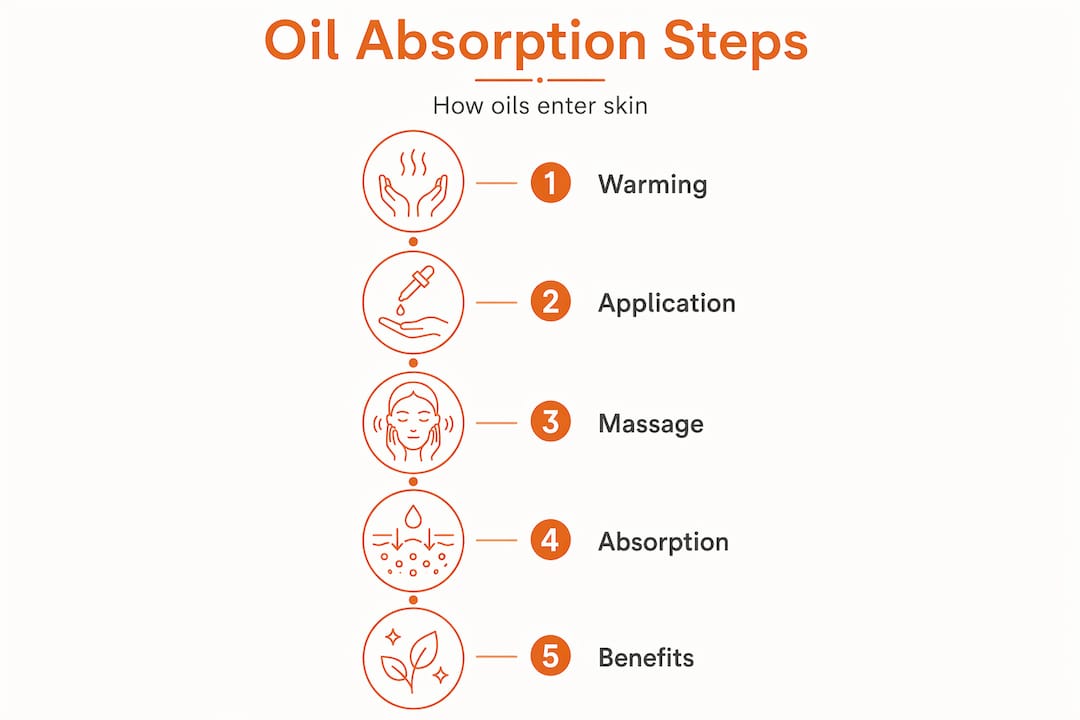
- Warm the oil to body temperature by rubbing it between your palms for 15 to 20 seconds.
- Cleanse skin and pat lightly damp.
- Apply 5 to 10 drops per area. Press gently into skin before massaging to initiate contact.
- Massage using circular, upward strokes for 5 to 10 minutes per area with medium-firm pressure.
- Allow 5 to 10 minutes post-massage before dressing to let absorption complete.
Building a complete routine:
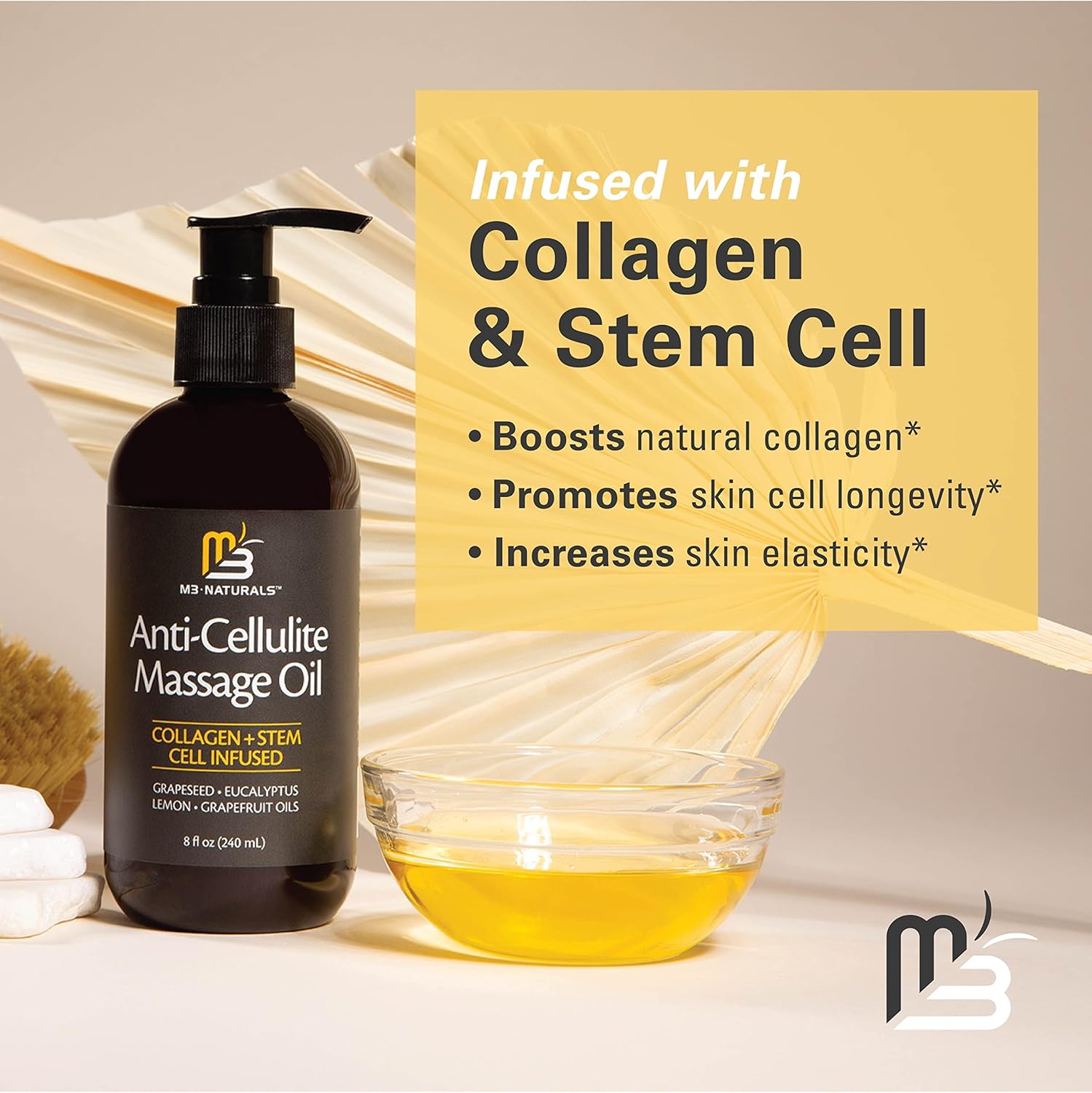
- Pair oil application with an anti-cellulite massage oil for targeted circulation support.
- Consider adding a magnesium massage oil for areas of muscle tension. Magnesium is one of the few minerals with meaningful transdermal potential.
- Rotate between light and heavier oils based on season. Skin is drier in winter and benefits from slightly richer oils. Summer skin often responds better to lightweight options like grapeseed or jojoba.
With these techniques in mind, let’s look at what most people consistently overlook.
What most skincare guides miss about massage oil absorption
Here’s the part that gets left out of nearly every article on the subject: mechanical technique matters more than which oil you choose. You can use the most expensive botanical oil on the market, but if you apply it with light, passive strokes and rinse it off after two minutes, you’ll see no meaningful absorption beyond the surface layer. Therapists who massage in circular and upward strokes for 5 to 10 minutes per area mechanically aid lipid mixing into the stratum corneum, and research has found trace oil components in the bloodstream within minutes of effective application. That’s not just skin hydration. That’s systemic absorption.
Most guides also treat warming as a preference rather than a protocol. It isn’t. Cold oil on cool skin is a barrier interaction. Warm oil on warm skin is chemistry working in your favor. The difference in how much oil actually penetrates versus sits on the surface can be as significant as your choice of oil type.
There’s also a timing issue that gets ignored. For longer massage sessions or when using fast-absorbing oils like jojoba, reapplication every 30 to 60 minutes maintains glide and keeps the absorption process active. A single application might be enough for a 15-minute self-massage, but a full-body session requires you to replenish.
Finally, skin condition is dynamic, not fixed. The same skin absorbs differently depending on hydration, time of day, recent exfoliation, and even temperature of the room. Adjust your oil amount and pressure accordingly. Combining a massage oil and roller kit can compensate on days when manual pressure alone isn’t enough to engage the barrier effectively.
Pro Tip: Tailor the amount and intensity of your massage to your skin’s current condition. Irritated or compromised skin needs less pressure and fewer drops, not more of both.
Discover natural massage oils that truly absorb and nourish
Now that you understand how massage oils absorb and what actually drives those benefits, you can shop and apply with purpose. M3 Naturals formulates its natural massage oils with skin absorption in mind, using botanically sourced ingredients that work with the skin’s lipid chemistry rather than against it.

- Relaxing lavender massage oil: A lightweight blend that absorbs quickly and supports calm, with lavender known for its skin-soothing properties.
- Anti-cellulite oil and massager kit: Combines targeted oil formulation with a mechanical roller to enhance absorption and circulation in stubborn areas.
- Oils crafted from ethically sourced ingredients including coconut oil, ylang ylang, ginger, and magnesium.
- Spa-quality results you can replicate at home with the right product and the right technique.
Frequently asked questions
How long does it take for massage oils to absorb into the skin?
Light oils like jojoba and grapeseed absorb in 1 to 3 minutes, while heavier oils like coconut can take 5 to 10 minutes, particularly on dry or thickened skin. Warming the oil and massaging with firm pressure shortens absorption time across all oil types.
Does warming massage oil really improve its absorption?
Yes. Warming oil before applying softens the stratum corneum and dilates surface vessels, improving penetration by as much as 20 to 50% compared to cold application. Cold oil applied to cool skin essentially contracts the barrier rather than opening it.
Can massage oils penetrate deeply enough to affect skin health?
Massage helps oils reach the dermis by physically disrupting the stratum corneum, delivering nutrients that support cell regeneration well below the surface. This goes beyond surface hydration and contributes to genuine skin barrier repair.
Is it safe to use massage oils on damaged skin?
Damaged skin can absorb oils up to 10 times faster than intact skin, which means irritation can escalate quickly if the wrong oil or too much pressure is used. Always patch test on a small area first and choose gentle, non-comedogenic oils with minimal additives.