
Starting a natural skincare routine sounds simple until you’re standing in a store aisle, scanning a wall of products that all claim to be “clean” while hiding a paragraph of unpronounceable chemicals on the back label. The frustration is real. You want to build a natural skincare routine that actually works, aligns with your values, and doesn’t require a chemistry degree to decode. The good news: it doesn’t have to be complicated. This guide walks you through exactly what you need, step by step, so you can create a routine that supports your skin and your ethics without the overwhelm.
Table of Contents
- What you need to build your natural skincare routine
- Step-by-step guide to your natural skincare routine
- Common mistakes and how to avoid them
- Expected results and adjusting your routine over time
- A fresh take on natural skincare routines: beyond products
- Explore cruelty-free natural skincare products at M3 Naturals
- Frequently asked questions
Key Takeaways
| Point | Details |
|---|---|
| Start simple | Begin with cleansing, moisturizing, and SPF before adding additional products to avoid irritation and confusion. |
| Use natural ingredients | Choose plant-based, cruelty-free, and ethically sourced ingredients for healthier skin and wellness. |
| Sun protection is crucial | Apply broad-spectrum SPF 30+ daily and reapply every two hours outdoors to protect skin long-term. |
| Customize by skin type | Adapt your products and routine steps to fit oily, dry, or combination skin for best results. |
| Be consistent | Results appear with regular use over weeks; avoid frequent product switching for skin stability. |
What you need to build your natural skincare routine
Before you buy a single product, you need a framework. A natural skincare routine uses plant-based, minimally processed ingredients to cleanse, hydrate, and protect your skin instead of synthetic chemicals. That definition matters because it immediately filters out a lot of products marketed as “natural” that aren’t.
Start with ingredient literacy. The ingredients you want to recognize and trust include:
- Aloe vera for soothing inflammation and delivering lightweight hydration
- Jojoba oil because its structure closely mirrors your skin’s own sebum, making it compatible with nearly every skin type
- Shea butter for deep moisture and barrier repair
- Rosehip seed oil for vitamin A and C content that supports cell turnover
- Chamomile extract for calming redness, especially on sensitive or reactive skin
- Charcoal for drawing out impurities in cleansers and masks
The placement of an ingredient on a label tells you how much of it is actually in the product. Ingredients are listed in descending order by concentration. If your “aloe vera moisturizer” lists aloe vera ninth and dimethicone second, it’s not really an aloe vera moisturizer. Read past the marketing.
| Ingredient | Skin type best suited for | Primary benefit |
|---|---|---|
| Jojoba oil | All, including oily | Balances sebum, lightweight |
| Shea butter | Dry, mature | Deep moisture, barrier repair |
| Aloe vera | Sensitive, oily | Soothing, lightweight hydration |
| Rosehip seed oil | Dry, aging, uneven tone | Brightening, cell renewal |
| Coconut oil | Dry, normal | Occlusive barrier, antibacterial |
| Chamomile extract | Sensitive, redness-prone | Anti-inflammatory, calming |
Beyond ingredients, you need basic tools: a soft cleansing cloth, a clean applicator brush or your fingertips, and a dedicated routine time, morning and evening. Exploring natural skincare products that are cruelty-free and ethically sourced removes the guesswork on the ethics side. Look for brands that display their cruelty-free certifications (Leaping Bunny or PETA’s Beauty Without Bunnies program) and source their botanicals with transparency about origin.
Pro Tip: When trialing a new natural product, do a patch test on your inner wrist for 24 hours before applying it to your face. Plant-based doesn’t automatically mean allergy-free.
Step-by-step guide to your natural skincare routine
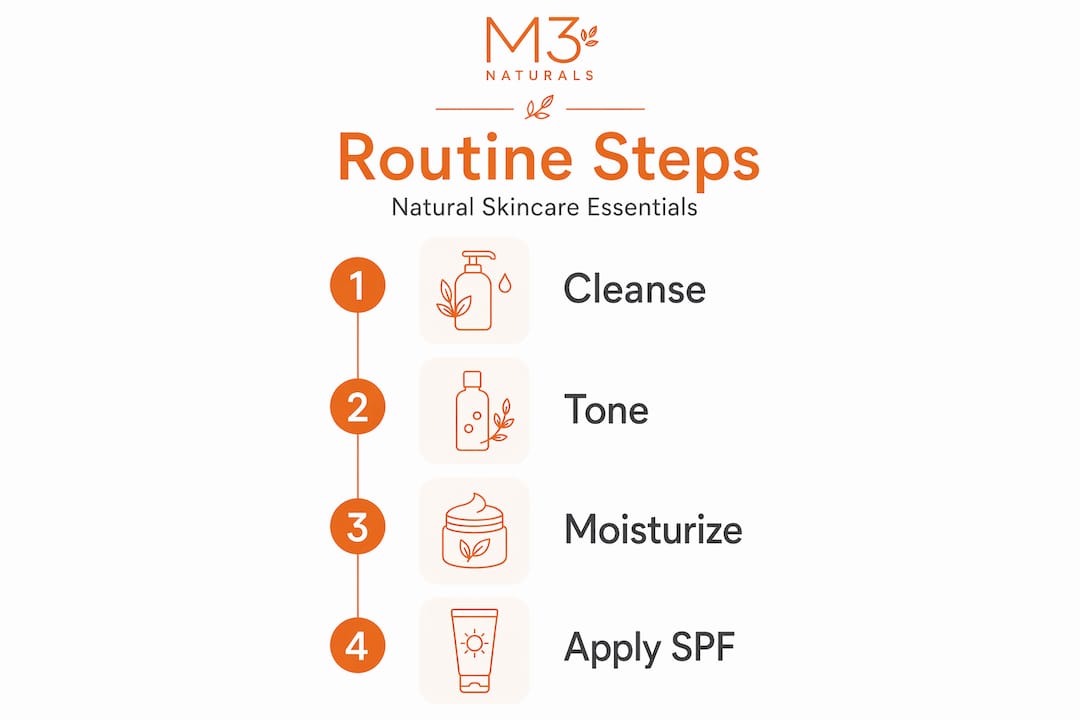
With the right products and tools ready, follow these instructions to establish your routine. The 4 essential steps in a natural skincare routine are cleansing, toning, moisturizing, and sun protection. Here’s how to execute each one properly.

1. Cleanse
Start with a gentle, plant-based cleanser morning and night. In the morning, a simple rinse or a light micellar water made with natural surfactants works well since your skin hasn’t been exposed to much overnight. At night, you need something that removes sunscreen, makeup, and daily buildup. Look for cleansers with coconut-derived cleansing agents or raw honey blends, both of which lift grime without stripping your skin’s acid mantle.
2. Tone
Apply a natural toner immediately after cleansing while your skin is still slightly damp. Rosewater is a classic choice because it’s anti-inflammatory, smells incredible, and works on every skin type. Cooled green tea applied with a cotton pad delivers antioxidants and reduces puffiness. Both balance your skin’s pH after cleansing, which primes it to absorb whatever comes next more effectively.
3. Moisturize
Effective moisturizing uses three categories of ingredients working together. Humectants (like aloe vera gel or hyaluronic acid from fermented plant sources) draw water into the skin. Emollients (like shea butter or squalane from olives) fill the gaps between skin cells and create a smooth surface. Occlusives (like plant-based oils including jojoba or argan) seal all of that moisture in. Browse natural face creams that combine these layers so you aren’t buying three separate products. For oily skin, skip the heavy occlusive layer and stick to a humectant serum with a lightweight emollient.
4. Apply SPF
This step is non-negotiable. Building a proper sun protection routine means applying broad-spectrum SPF 30 or higher every single morning as your final step, regardless of season or cloud cover. UV rays penetrate glass and cloud cover. Mineral sunscreens with zinc oxide are the preferred choice for anyone building a natural routine because they sit on top of the skin and physically deflect UV rather than absorbing into your body.
Customize by skin type:
- Oily skin: Gel-based cleanser, witch hazel toner, niacinamide serum, lightweight gel moisturizer, mattifying mineral SPF
- Dry skin: Cream cleanser, rosewater toner, hyaluronic acid serum, shea butter moisturizer, SPF moisturizer hybrid
- Combination skin: Balancing cleanser, green tea toner, niacinamide plus aloe blend, medium-weight lotion, SPF 30+
- Sensitive skin: Micellar water, chamomile toner, oat extract moisturizer, zinc oxide SPF 30
Follow the same sequence in your natural skincare routine steps every day. Consistency matters more than product perfection.
Pro Tip: Apply your sunscreen 15 minutes before you step outside, not as you’re walking out the door. The mineral filters need a moment to settle before they’re fully effective.
Common mistakes and how to avoid them
To ensure your routine works, be aware of these common pitfalls and how to sidestep them effectively.
Over-exfoliating, skipping SPF, skipping moisturizer on oily skin, and switching products too fast are the mistakes that derail most natural skincare routines before they ever deliver results. Here’s a closer look at each.
Mistakes to stop making right now:
- Exfoliating every day. Natural exfoliants like sugar scrubs and AHAs remove dead skin cells, but daily use tears down your barrier faster than it can rebuild. Twice a week on non-consecutive days is the right cadence.
- Skipping sunscreen because it’s cloudy. Up to 80% of UV rays still reach your skin through cloud cover. If it’s daytime, you need SPF.
- Avoiding moisturizer if you have oily skin. Oily skin is often dehydrated skin in disguise. When you strip moisture, your skin compensates by producing more oil. A lightweight, water-based moisturizer actually reduces oiliness over time by giving your sebaceous glands permission to calm down.
- Adding three new products at once. If your skin reacts, you won’t know which product caused it. Introduce one new product at a time and wait at least two weeks before adding another.
- Using too little sunscreen. Most people apply about a quarter of the recommended amount. For your face and neck, you need roughly half a teaspoon of SPF, applied in two layers.
Worth remembering: Your skin is not a problem to be solved in a week. It’s an organ that responds to consistent care over months. Rushing the process almost always sets you back further than starting slow would have.
Knowing where you’re avoiding common skincare mistakes puts you ahead of most people who abandon their routines within a month because they expected overnight transformation.
Pro Tip: Keep a simple phone note logging what you introduced, when, and how your skin responded. Two months of tracking tells you more about your skin than any quiz.
Expected results and adjusting your routine over time
After avoiding mistakes, understand what results to expect and how to fine-tune your routine for ongoing benefits.
Patience is a core ingredient in any natural skincare routine. Skin adjusts over two to four weeks before you should add new products or judge whether something is working. That timeline aligns with your skin’s natural cell turnover cycle, roughly 28 days for younger adults and longer as you age.
What to expect, week by week:
- Weeks 1 to 2: Your skin adjusts. You may notice minor changes in texture or even a brief purging period if you’ve introduced a gentle acid or oil.
- Weeks 3 to 4: Hydration levels visibly improve. Skin feels softer, looks more even, and morning puffiness typically decreases.
- Months 2 to 3: Glow, tone consistency, and pore appearance improve with consistent SPF and moisturizing. These are the benefits that keep you committed.
Seasonal adjustments are not optional. What works in summer often fails in winter. Here’s a practical guide:
| Season | Adjustment needed | Why |
|---|---|---|
| Summer | Lighter gel moisturizer, higher SPF | Heat and sweat increase oil production |
| Winter | Richer cream moisturizer, add a face oil | Cold air and indoor heating deplete moisture |
| Spring | Reintroduce toner, reduce heavy occlusives | Transitional weather shifts oil balance |
| Fall | Start adding richer moisture before it gets cold | Prevention is easier than repair |
Listen to what your skin is telling you. Redness, tight feelings, or sudden breakouts are signals to pull back on active ingredients and return to basics. Consistent SPF use is the single most documented factor in preventing premature skin aging, and it costs almost nothing extra when it’s already part of your morning routine.
A fresh take on natural skincare routines: beyond products
Here’s what most skincare guides won’t tell you: the products themselves are responsible for maybe 40% of your results. The rest comes from factors most people treat as unrelated to skin health.
Your skin reflects your internal environment first. Chronic stress elevates cortisol, which triggers inflammation and breaks down collagen. Poor sleep disrupts repair cycles that only run during deep sleep. Dehydration makes every moisturizer less effective because you’re trying to hydrate from the outside in, which is inefficient at best. A genuinely natural skincare approach treats these variables as part of the routine, not separate from it.
The ethical dimension matters too. Choosing cruelty-free, ethically sourced products isn’t just about values signaling. It’s about your relationship with your own wellness practice. When you trust where your ingredients come from and know no harm was done to produce them, the routine becomes something you actually look forward to rather than a chore you rush through.
The other truth: more products do not equal better results. A four-step minimalist skincare routine used consistently for six months will outperform a 12-step routine abandoned after three weeks. Simplicity isn’t compromise. It’s strategy. The most common reason people abandon natural skincare routines is complexity, not ineffectiveness.
Build the smallest routine that addresses your real concerns. Master it. Then add only if a genuine need remains.
Explore cruelty-free natural skincare products at M3 Naturals
Ready to start building your natural skincare routine? M3 Naturals offers a curated selection to help you get there with confidence.
The products in the natural skincare collection at M3 Naturals are formulated with plant-based ingredients like coconut oil, turmeric, lavender, and charcoal, and are free from harsh synthetic additives. Whether you’re building a routine from scratch or upgrading what you already use, every product is crafted to deliver spa-quality results at home.

Start with a natural body scrub to prep your skin with gentle exfoliation, then follow with a natural massage oil to lock in moisture and support relaxation. Each product is cruelty-free, ethically sourced, and designed to work for multiple skin types. Your natural skincare journey starts with one good decision. Make it today.
Frequently asked questions
What are the must-have steps for a natural skincare routine?
The essential steps include gentle cleansing, natural toning, moisturizing with plant-based ingredients, and daily broad-spectrum SPF 30+ sun protection. These four steps form the foundation every effective natural routine is built on.
How often should I reapply sunscreen when building a natural routine?
Reapply sunscreen every two hours when outdoors, applying it 15 to 30 minutes before sun exposure. After swimming or sweating heavily, reapply immediately regardless of how recently you last applied.
Can natural skincare routines work for sensitive skin?
Yes, natural routines are often gentler than conventional ones for sensitive skin. Mineral sunscreens with zinc oxide and soothing botanicals like aloe vera and chamomile calm reactivity without the harsh preservatives or fragrances that typically trigger flares.
How long does it take to see results from a natural skincare routine?
Skin adjusts in two to four weeks, which is when you can realistically expect to see improved hydration, smoother texture, and a more even glow. Longer-term benefits like reduced fine lines and tone consistency build over several months of consistent use.