
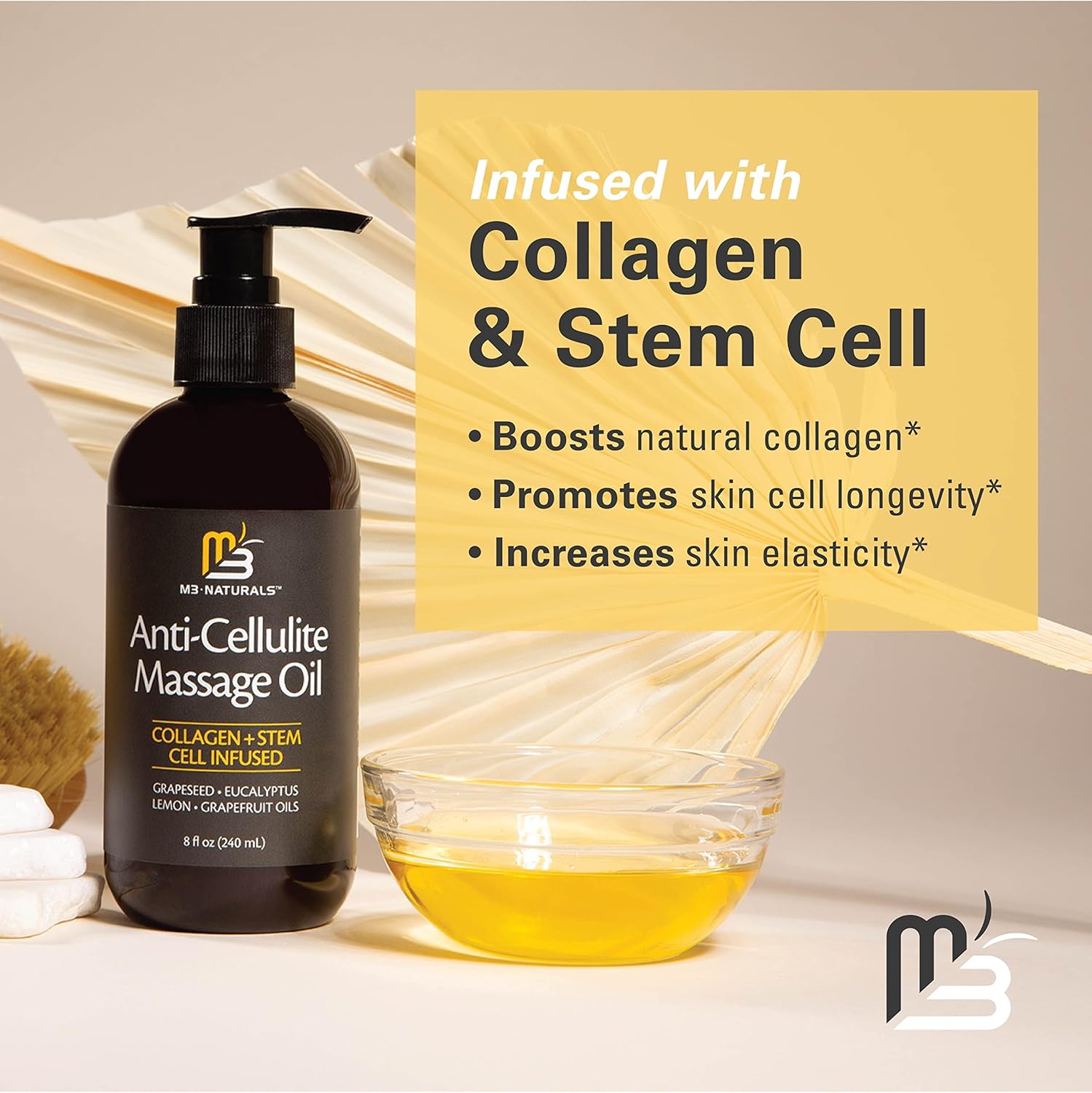

You pushed hard in the gym, on the track, or on the field. Now your muscles are screaming. The good news is that the right massage oil for muscle recovery can cut through that soreness faster than rest alone. Research shows massage therapy outperforms static stretching and cold-water immersion at reducing markers of muscle damage and inflammation. This guide covers exactly which oils work, how to blend them, how to apply them correctly, and the mistakes that keep most athletes from getting the full benefit.
Table of Contents
- Key takeaways
- Choosing the right massage oil for muscle recovery
- How to build your recovery oil blend
- Application techniques that actually work
- Mistakes that undercut your results
- What to expect from regular use
- My honest take on massage oils for recovery
- Try M3naturals for your recovery routine
- FAQ
Key takeaways
| Point | Details |
|---|---|
| Carrier oils matter as much as essential oils | Choose anti-inflammatory carriers like walnut or EVOO to address inflammation at the tissue level. |
| Timing determines effectiveness | Use non-warming oils immediately post-workout; save warming blends for 24 to 48 hours later. |
| Dilution is non-negotiable | Never apply undiluted essential oils directly to skin; always blend with a carrier at safe ratios. |
| Consistency builds real results | Bi-weekly massage with quality oils over eight weeks measurably improves flexibility and performance. |
| Combine methods for faster recovery | Pairing massage oils with percussive therapy or professional massage accelerates results significantly. |
Choosing the right massage oil for muscle recovery
Before you buy anything, you need to understand what is actually in the bottle. Massage oils for athletes fall into two categories: carrier oils and essential oils. Most products combine both, but understanding what each one does will help you read labels with confidence.
Carrier oils worth knowing
Carrier oils form the base of any muscle recovery blend. They absorb into the skin and deliver active compounds into the tissue. Here are the four worth prioritizing:
- Sweet almond oil: Light texture, absorbs quickly, and is one of the most widely used bases for athletic massage. It works well on all skin types and does not leave a heavy residue after application.
- Jojoba oil: Technically a liquid wax, jojoba closely mimics the skin’s natural sebum. It absorbs without clogging pores, making it a practical option for post-workout application when your skin is warm and open.
- Walnut oil: This is an underused option that deserves more attention. Walnut oil is rich in alpha-linolenic acid (ALA), a plant-based omega-3 that acts as a biological anti-inflammatory when massaged into muscle tissue. If you train frequently and deal with chronic low-grade soreness, this one belongs in your rotation.
- Extra virgin olive oil (EVOO): EVOO contains oleocanthal, a compound that mimics ibuprofen’s action at reducing muscle pain and inflammation. It is thicker than the others, so blend it with a lighter oil if you want easier absorption.
Essential oils for muscle pain
Essential oils supply the targeted pain relief and anti-inflammatory punch. The most effective ones for muscle soreness include peppermint (cooling and analgesic), eucalyptus (anti-inflammatory and circulatory), ginger (warming and deeply penetrating), and lime. In a 2025 controlled study on young male boxing athletes, lime oil massage reduced lactic acid levels and pain intensity more effectively than massage with standard lotion.
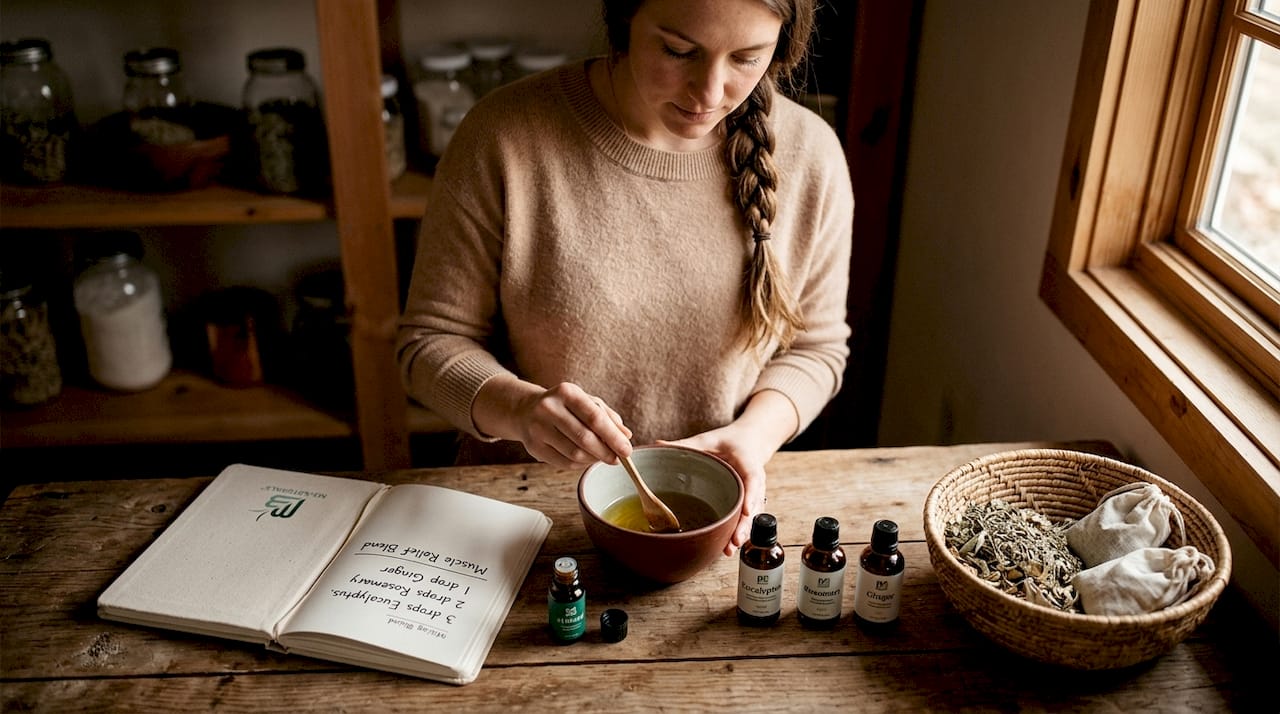
Pro Tip: If you have sensitive skin, start with lavender or chamomile essential oils instead of peppermint or ginger. They are gentler while still offering anti-inflammatory and relaxation benefits, which matters for aromatherapy for muscle recovery.
How to build your recovery oil blend
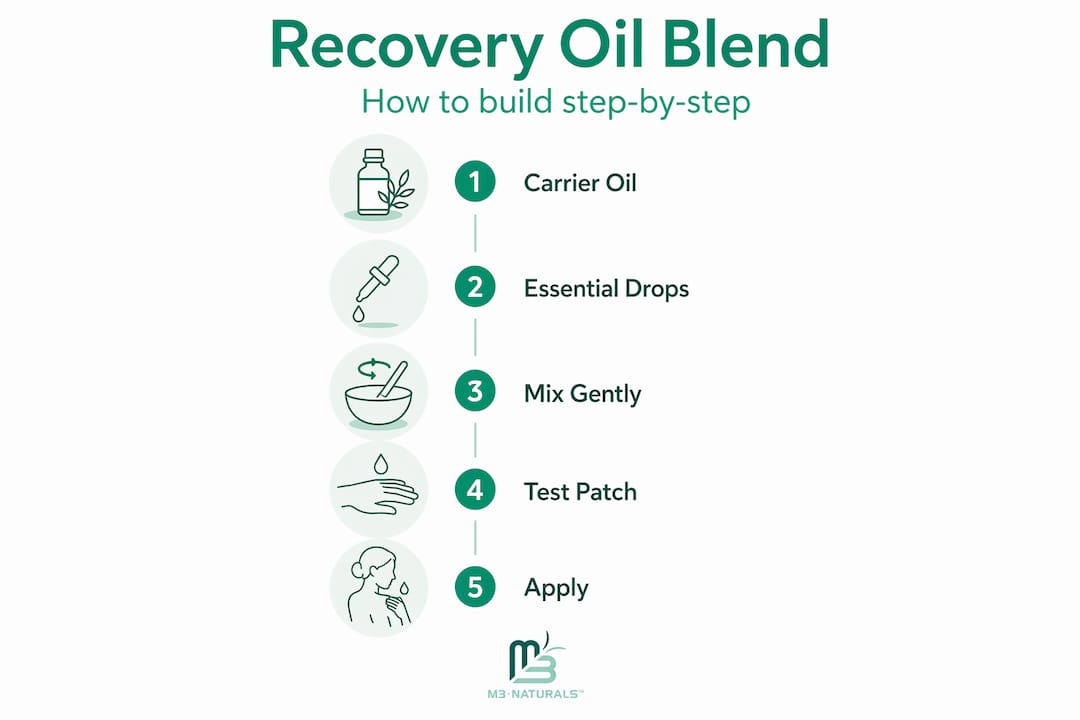
Getting results from a natural muscle recovery oil is partly about what you choose and partly about how you prepare it. Here is a straightforward process to get it right.
-
Assess your soreness profile. Acute soreness within 24 hours of a hard session calls for a cooling, non-warming blend. If you are dealing with stiffness and tightness 48 or more hours out, you can move to warming oils like ginger or clove.
-
Pick your carrier base. For general use, sweet almond or jojoba works well. For athletes who train four or more times per week and need more anti-inflammatory support, blend walnut oil with a lighter carrier at a 1:2 ratio.
-
Choose one or two essential oils. Keep it simple. A common muscle relief massage blend is 2 percent essential oil in carrier oil. That translates to 12 drops of essential oil per 30ml (one ounce) of carrier. More is not better here.
-
Mix in a dark glass bottle. Essential oils degrade when exposed to light. A dark amber glass bottle with a dropper extends shelf life and maintains potency.
-
Patch test before full use. Apply a small amount to the inside of your forearm. Wait 24 hours. If there is no redness, itching, or irritation, you are clear for full application.
-
Consider a trusted pre-formulated product. If you prefer to skip the DIY route, look for products that list specific carrier oils and essential oils by name on the label, not just “fragrance.” M3naturals formulates its sore muscle massage oil with that kind of ingredient transparency in mind.
Pro Tip: Add five drops of eucalyptus essential oil to a jojoba and walnut blend for a recovery oil that addresses both inflammation and circulation in one application.
Application techniques that actually work
Knowing how to use massage oil is as important as which oil you pick. The most common mistake athletes make is applying warming oils too early. Non-warming, high-slip oils are the right call immediately post-workout when acute inflammation is still active. Warming oils like ginger or clove are more effective 24 to 48 hours later, once the acute inflammatory phase has passed.
Here is what good application looks like in practice:
- Warm the oil first. Pour a small amount into your palm and rub your hands together for 10 seconds before applying. Warm oil absorbs faster and feels better against post-workout skin.
- Work with muscle fiber direction. Long, gliding strokes along the length of the muscle (effleurage) spread the oil and promote circulation. Circular friction strokes on knotted areas help break up adhesions.
- Apply moderate pressure on large muscle groups. Quads, hamstrings, calves, and lats respond well to consistent medium pressure. Avoid deep pressure on joints or areas with acute pain or swelling.
- Spend two to three minutes per muscle group. Rushing through the application cuts absorption time and limits the therapeutic benefit of the oil.
- Finish with light compression. After massaging, apply light palm pressure over the treated area for 20 to 30 seconds. This supports oil absorption and provides a sense of muscle containment that reduces post-massage achiness.
“Massage therapy helps athletes maintain training consistency by managing muscle stiffness and promoting tissue repair on both physiological and functional levels.” — American Massage Therapy Association research coverage
For athletes using percussive devices alongside manual massage, pairing them with a good oil amplifies results. Percussive therapy can reduce DOMS by 20 to 40 percent, and using massage oil before or after a percussive session improves tissue response and skin feel.
Mistakes that undercut your results
Even a great massage oil for muscle recovery will underperform if you use it wrong. Here are the most common errors and how to fix them:
- Applying warming oils during acute inflammation. This is the single biggest mistake. Ginger, clove, and cinnamon-based oils feel helpful in the moment but can amplify inflammation during the first 24 hours post-training. Stick to neutral or cooling blends right after a workout.
- Using undiluted essential oils. Pure essential oils applied directly to skin can cause chemical burns, irritation, or sensitization over time. Always dilute. The 2 percent rule (12 drops per ounce of carrier) is a safe starting point.
- Skipping the patch test. Nut-based carrier oils like almond and walnut are common allergens. If you have a tree nut allergy, choose jojoba or fractionated coconut oil as your base.
- Expecting one session to fix everything. A 2025 RCT with 150 athletes found that bi-weekly deep tissue massage over eight weeks was required to see measurable improvements in flexibility and athletic performance. Single sessions help, but consistency is what produces lasting change.
- Buying oils based on scent alone. Fragrance-heavy oils often use synthetic aromatic compounds that do not carry the therapeutic properties of true essential oils. Check labels for botanical names and concentration percentages.
What to expect from regular use
The results from consistent use of massage oils for athletes are real and measurable. The table below gives a realistic timeline based on available research.
| Benefit | When you’ll notice it | Supporting evidence |
|---|---|---|
| Reduced DOMS and soreness | After 1 to 3 sessions | Massage therapy reduces muscle damage markers more effectively than stretching |
| Improved flexibility and range of motion | Weeks 4 to 8 with regular use | Bi-weekly massage over 8 weeks improves athletic flexibility in RCT |
| Deeper relaxation and sleep quality | Within the first week | Aromatherapy for muscle recovery activates the parasympathetic nervous system |
| Training consistency and injury prevention | Ongoing with regular use | Massage supports tissue repair and reduces stiffness between sessions |
| Lasting pain relief vs. surface warming | With deep-penetrating formulations | Oils that penetrate deeply address inflammation at the root, not just the surface |
The athletes who get the most out of massage oils are those who treat them as a regular recovery tool, not an emergency measure. Building a twice-weekly self-massage habit with quality oils, timed correctly, creates a compounding benefit over months of training.
My honest take on massage oils for recovery
I have tried a lot of recovery products, and I will say this directly: most athletes are using massage oils wrong, and that is why they underestimate them.
For a long time, I grabbed whatever oil was nearby after a workout, warmed it up, and went to town. The results were underwhelming. It was not until I understood the timing principle, specifically that non-warming oils belong post-workout and warming oils belong 24 to 48 hours later, that I started noticing a genuine difference in next-day stiffness.
The other shift that changed things for me was paying attention to the carrier oil, not just the essential oils. Most people focus entirely on whether something smells like peppermint or eucalyptus. But a walnut or EVOO base with real oleocanthal content is doing more work than the fragrance layer on top of it. The oils that penetrate deeply and address inflammation at the root are in a completely different category from oils that just create surface warmth.
The combination that works best in my experience: a light carrier base immediately post-workout, a warming essential oil blend the next day, and percussive therapy on the days between sessions. That combination is not complicated, but almost no one does all three parts consistently.
— SuperNatural
Try M3naturals for your recovery routine
Ready to put this into practice? M3naturals builds its recovery products around the same principles this guide covers: natural ingredients, real carrier oils, and blends designed for people who actually train hard.

The M3naturals sore muscle massage oil is formulated specifically for post-workout recovery, with a blend that skips the synthetic fragrance and delivers the kind of ingredient transparency worth looking for on any label. If you want to explore the full range of options, the massage oils collection covers blends for different needs, from deep tissue work to lighter daily recovery use. For athletes who want to build out a full recovery and body care routine, the body care collection pairs well with any massage oil regimen.
FAQ
What is the best carrier oil for muscle recovery?
Walnut oil and extra virgin olive oil are two of the strongest options due to their anti-inflammatory compounds. Walnut oil provides plant-based omega-3s, while EVOO contains oleocanthal, which mimics ibuprofen’s pain-relieving action.
When should you apply massage oil after a workout?
Use non-warming, neutral oils like jojoba or sweet almond immediately after training. Save warming blends containing ginger or clove for 24 to 48 hours later, once the acute inflammation phase has passed.
How often should athletes use massage oil?
Research from a 2025 RCT found that bi-weekly application over eight weeks produced measurable improvements in flexibility and performance. For most athletes, two to three self-massage sessions per week delivers consistent recovery benefits.
Can you mix your own massage oil for muscle recovery?
Yes. A safe starting blend is 12 drops of essential oil per one ounce of carrier oil, which equals a 2 percent dilution. Always patch test on the forearm before full application, especially if you have known nut allergies.
Do massage oils actually reduce soreness or just mask it?
Quality massage oils penetrate tissue and address inflammation directly, not just mask discomfort. Studies show massage therapy reduces muscle damage markers more effectively than stretching or cold-water immersion, and the right oil compounds amplify that effect.