

The neck and chest are the most neglected areas in skincare, yet they age faster than the face. These zones have thinner skin, fewer oil glands, and weaker barrier function than facial skin, making them more vulnerable to dryness, UV damage, and collagen loss. Understanding why neck and chest need skincare is the first step toward preventing the premature wrinkles, sagging, and discoloration that appear when these areas go untreated. The good news: consistent care with the right ingredients produces measurable results, as clinical research now confirms.
Why neck and chest need skincare: the skin is built differently
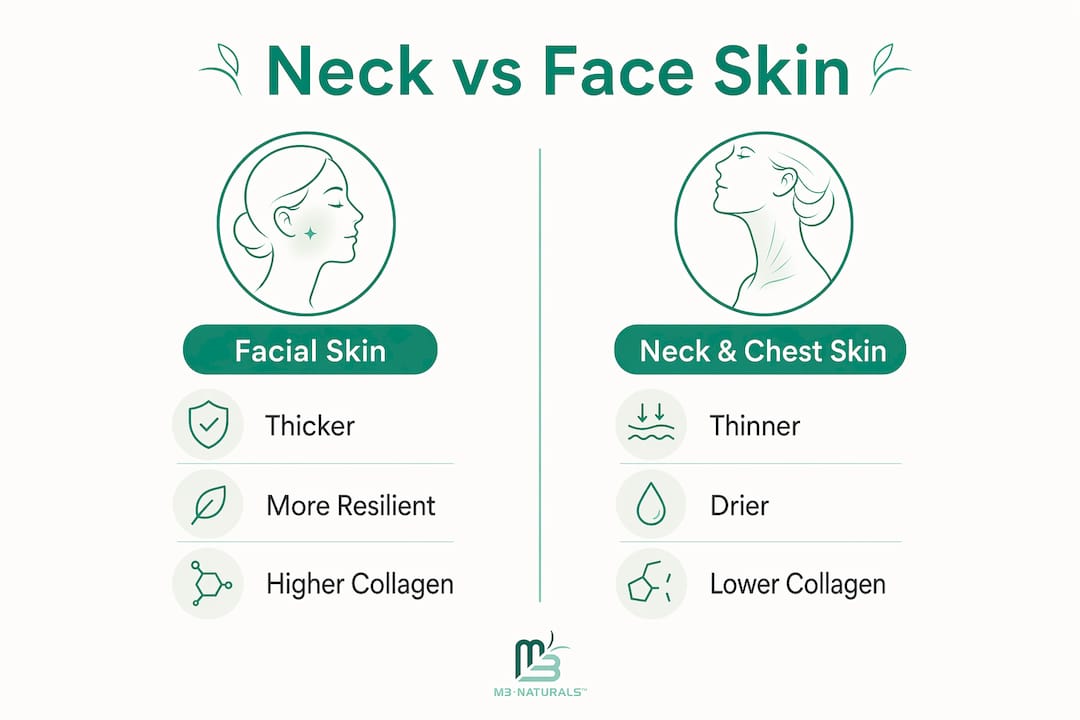
The skin on your neck and chest is structurally different from the skin on your face. Neck and chest skin is thinner and contains fewer sebaceous glands, which means it produces less natural oil. Less oil means less natural moisture retention, which leads to faster dryness, irritation, and a compromised skin barrier.
Collagen production in these areas also lags behind the face. The neck and chest receive less daily attention in skincare routines, so they accumulate UV damage and environmental stress without the protective benefit of regular antioxidants, SPF, or hydrating actives. The result is accelerated aging that often catches people off guard.

| Feature | Facial skin | Neck and chest skin |
|---|---|---|
| Skin thickness | Thicker, more resilient | Thinner, more fragile |
| Sebaceous glands | More abundant | Fewer, drier by nature |
| Collagen density | Higher with regular care | Depletes faster without care |
| UV exposure risk | Moderate (often protected) | High (frequently exposed, rarely protected) |
| Aging speed | Slower with routine care | Faster without dedicated attention |
The neck also moves constantly. Repeated motion from looking down at phones and screens creates horizontal creases that deepen over time. Dermatologists refer to these as “tech neck” lines, and they form earlier than most people expect.
Pro Tip: Extend your face wash downward every morning. Cleansing the neck and chest removes sweat, sunscreen residue, and environmental pollutants that accelerate skin breakdown.
What does clinical research say about neck and chest skincare?
Clinical evidence confirms that consistent skincare produces real, measurable improvements in neck and chest skin. A 12-week clinical study on a neck and décolleté serum found that 98% of subjects reported softer and smoother skin, and 80% experienced better firmness and contour. The study involved 46 women between ages 37 and 64, all following a twice-daily routine that included a cleanser, serum, and SPF 50 sunscreen. Those results are not subtle. They show that the neck and chest respond well to targeted care when the routine is consistent.
The ingredients driving those results are well established in dermatology. Ceramides, hyaluronic acid, retinol, and peptides replenish moisture, stimulate collagen production, and reduce fine lines in neck and décolleté skin. Each ingredient addresses a different layer of the problem. Hyaluronic acid pulls water into the skin. Peptides signal the skin to produce more collagen. Retinol accelerates cell turnover. Ceramides seal the barrier so moisture stays in.
Clinically supported benefits of a consistent neck and chest skincare routine include:
- Softer, smoother skin texture within weeks of starting a routine
- Improved firmness and contour from collagen-stimulating ingredients like peptides and retinol
- More even skin tone through brightening actives that address hyperpigmentation
- Reduced appearance of fine lines and crepey texture with regular hydration
- Stronger skin barrier function from ceramide-rich moisturizers
Pro Tip: If you use a vitamin C serum on your face each morning, apply it to your neck and chest too. Vitamin C neutralizes UV-generated free radicals and brightens uneven skin tone in both areas.
How should you build a neck and chest skincare routine?
Building a neck and chest skincare routine does not require buying a separate product line. Extending your facial skincare products to the neck and chest is usually sufficient for most people. Consistency and the right active ingredients matter far more than specialty formulas. The key is making these areas part of every step, not an afterthought.
Morning routine
- Cleanse your face, neck, and chest with a gentle, pH-balanced cleanser to remove overnight buildup.
- Apply serum with hyaluronic acid or vitamin C from your jawline down to your chest.
- Moisturize with a cream or lotion containing ceramides or peptides to lock in hydration.
- Apply SPF 30 or higher to your neck, chest, and any exposed décolleté. Sun protection is critical because these areas are highly exposed to UV radiation, which accelerates premature aging.
Evening routine
- Double cleanse if you wore sunscreen or makeup on your chest and neck.
- Apply retinol or a peptide serum to stimulate collagen overnight.
- Finish with a rich moisturizer to support overnight skin repair and barrier recovery.
- Exfoliate gently two to three times per week using a mild chemical exfoliant or a body scrub technique to remove dead skin cells and improve product absorption.
The most common mistake people make is skipping SPF on the chest. UVA rays penetrate clothing and reflect off surfaces, reaching skin even on overcast days. Forgetting SPF on the décolleté is one of the fastest ways to accumulate visible sun damage in that area.
Pro Tip: Keep your SPF and moisturizer on the bathroom counter next to your face products. Physical proximity makes it far easier to remember to apply them to your neck and chest every single morning.
What signs of neglect appear on the neck and chest?
Neglecting the neck and chest produces visible aging signs including crepey texture, wrinkles, sagging, dullness, and hyperpigmentation. These symptoms develop from collagen loss, chronic sun exposure, and dehydration working together over years. By the time most people notice them, the damage has been accumulating for a decade.
Crepey texture is one of the earliest signs. It appears when the skin loses elasticity and hydration, creating a thin, paper-like surface. Sagging follows as collagen and elastin break down without replenishment. Hyperpigmentation, including sunspots and uneven patches, develops from years of unprotected UV exposure on skin that was never given antioxidant or SPF coverage.
Warning signs to watch for and the skincare responses that address them:
- Crepey texture: Add hyaluronic acid and a peptide serum to your routine twice daily
- Horizontal neck lines: Use retinol at night to accelerate cell turnover and soften creases
- Sagging skin: Peptides and collagen-stimulating ingredients firm skin over consistent use
- Sunspots or uneven tone: Apply vitamin C in the morning and use SPF daily without exception
- Persistent dryness: Switch to a ceramide-rich moisturizer and consider adding a natural body care oil for deeper hydration
| Condition | Untreated outcome | Treated outcome |
|---|---|---|
| Crepey texture | Worsens and spreads with age | Improves with hydration and exfoliation |
| Hyperpigmentation | Deepens with continued UV exposure | Fades with SPF and vitamin C over time |
| Sagging | Accelerates without collagen support | Slows and firms with peptides and retinol |
| Dryness | Leads to irritation and barrier damage | Resolves with ceramides and consistent moisture |
Professional facials for the neck and chest can also support skin health by providing targeted cleansing, exfoliation, and treatments that address early aging signs. These are a useful complement to a daily at-home routine, not a replacement for one.
Key Takeaways
The neck and chest age faster than the face because their skin is thinner, drier, and more exposed to UV damage, but consistent care with SPF, hydration, and collagen-boosting ingredients produces measurable improvements.
| Point | Details |
|---|---|
| Skin structure differs | Neck and chest skin is thinner with fewer oil glands, making it drier and more fragile than facial skin. |
| Clinical results are real | A 12-week study found 98% of participants reported softer skin with a consistent twice-daily routine. |
| SPF is non-negotiable | Daily sun protection on the neck and chest prevents hyperpigmentation, sagging, and accelerated aging. |
| Extend what you already use | Applying your existing face products to the neck and chest is enough for most people to see results. |
| Early action prevents visible damage | Crepey texture, sagging, and sunspots are preventable with hydration and SPF started before signs appear. |
The part most skincare routines get completely wrong
Most skincare routines stop at the jawline. I have seen this pattern repeatedly, and the result is always the same: a well-maintained face sitting on a neck that tells a completely different story. The contrast is striking, and it is entirely avoidable.
The advice I give most often is the simplest: treat your neck and chest as an extension of your face, not as a separate concern. Dr. Vergara’s point that hydration and sun protection matter more than specialized products is one I agree with completely. People spend money on expensive neck creams when they would get better results just by applying their existing SPF and moisturizer two inches lower every day.
The other mistake I see constantly is inconsistency. Skincare works through accumulation. One week of good habits does nothing. Six months of good habits changes the skin. The neck and chest respond to care just as the face does. They just need you to show up for them every day. Checking out why natural body products work for skin health is a good starting point if you want to understand what ingredients to prioritize.
Start simple. Cleanser, moisturizer, SPF. Do that every day for three months and you will see a difference.
— SuperNatural
M3naturals products that support neck and chest skin health
Exfoliation and hydration are the two pillars of healthy neck and chest skin, and M3naturals makes both straightforward.

M3naturals body scrubs remove the layer of dead skin cells that dulls the neck and chest, allowing moisturizers and serums to absorb more effectively. Regular exfoliation also improves circulation and skin texture over time. For hydration, M3naturals massage oils deliver deep moisture to the neck and chest while supporting skin suppleness. Both product lines use natural ingredients like coconut oil, lavender, and botanical extracts that work with your skin rather than against it. Adding either to your existing routine takes less than two minutes and makes a visible difference.
FAQ
Why does neck skin age faster than facial skin?
Neck skin is thinner and contains fewer oil-producing glands than facial skin, making it more prone to dryness, collagen loss, and UV damage. These factors combine to accelerate visible aging signs like sagging and wrinkles.
Do I need a special neck cream, or can I use my face products?
Extending your existing face products to the neck and chest is sufficient for most people. Consistency and active ingredients like hyaluronic acid, peptides, and SPF matter more than a specialized formula.
How often should I exfoliate my neck and chest?
Gentle exfoliation two to three times per week removes dead skin cells and improves the absorption of serums and moisturizers. Avoid harsh scrubbing, which can irritate the thinner skin in these areas.
What is the single most important product for neck and chest care?
SPF is the most critical product for neck and chest skin. Daily sun protection prevents hyperpigmentation, collagen breakdown, and the accelerated aging caused by UV exposure on these frequently exposed areas.
Can skincare actually improve existing neck and chest damage?
Clinical research confirms it can. A 12-week study showed that 98% of participants experienced softer, smoother skin and 80% saw improved firmness with a consistent twice-daily routine using a serum, moisturizer, and SPF.