


Men’s skin is biologically distinct from women’s skin, and that difference is exactly why men need skincare routines built around their specific biology rather than borrowed habits. Men’s skin is 20-25% thicker and produces two to three times more sebum, creating a unique set of challenges that generic grooming advice simply does not address. Razor burn, enlarged pores, oiliness, and accelerated UV damage are not cosmetic inconveniences. They are predictable outcomes of ignoring how male skin actually functions. The good news: a targeted routine takes under five minutes a day and delivers measurable results within weeks.
Why men need skincare routines: the biology behind it
Men’s skin operates under different conditions than women’s skin, and understanding those conditions is the fastest way to stop wasting money on products that do not work.
How male skin differs structurally
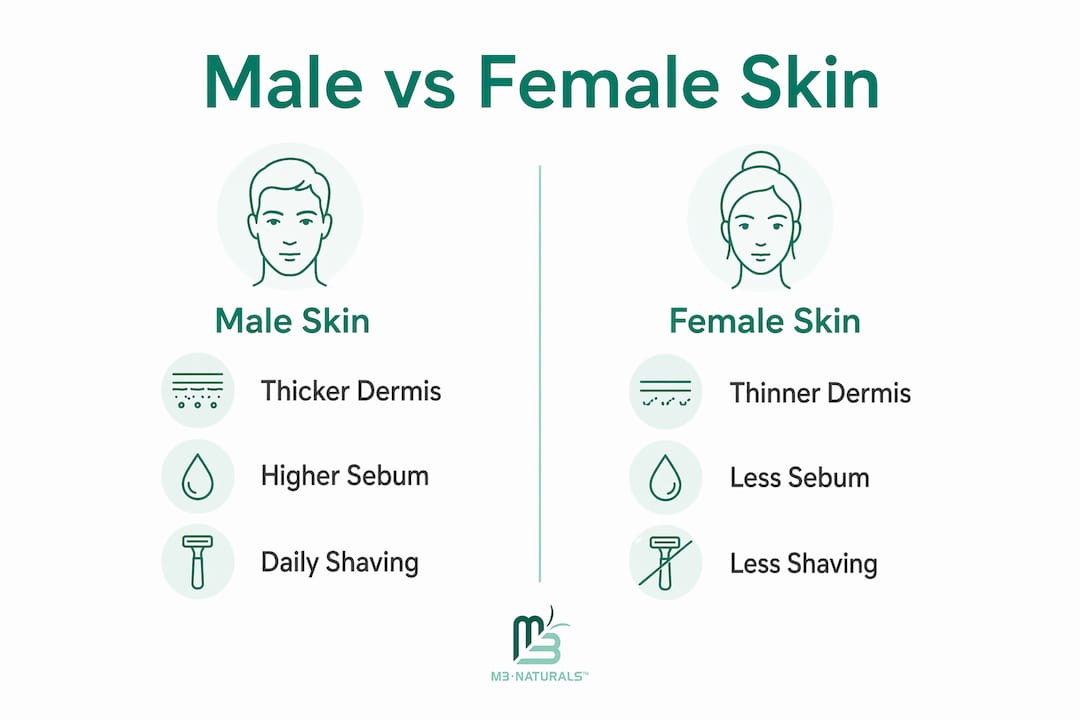
Male skin carries a higher collagen density and a thicker dermis, which gives it a firmer texture in youth but accelerates visible sagging once collagen loss begins. Collagen drops roughly 1% per year after age 25, meaning a 35-year-old man has already lost about 10% of his skin’s structural support. That loss is invisible until it is not. The thicker skin also means active ingredients like retinol and vitamin C penetrate differently, which is actually an advantage: men’s skin tolerates stronger actives better than most people assume.

Sebum, pores, and daily shaving
Higher sebum production keeps skin moisturized but also clogs pores, feeds acne-causing bacteria, and creates a persistent shine that no amount of face-washing fixes without the right cleanser. Larger pores are a direct result of that oil volume, not genetics alone. On top of that, daily shaving creates micro-injuries across the face. Shaving disrupts the skin barrier and triggers low-grade inflammation every single morning, which compounds over years into chronic redness, sensitivity, and accelerated aging if left unaddressed.
| Biological factor | Effect on skin | Routine implication |
|---|---|---|
| 20-25% thicker dermis | Slower product absorption | Use slightly higher concentrations of actives |
| 2-3x more sebum | Oilier skin, larger pores | Gel or foam cleanser twice daily |
| Daily shaving | Barrier disruption, micro-injuries | Post-shave moisturizer or barrier repair serum |
| Higher collagen density | Firmer skin early, faster loss later | Start retinol before visible aging appears |
| Higher UV exposure behavior | Greater melanoma risk | SPF 30 or higher every morning, no exceptions |
What does a basic skincare routine for men look like?
The men’s skincare market has grown to $30 billion, driven by men who finally understand their skin biology rather than just responding to marketing. That growth reflects a shift: skincare is now understood as preventive health care, not vanity. A simple routine costs $30 to $50 and takes less than five minutes. Here is the structure that works.
- Morning cleanser. Use a gel or foam cleanser formulated for oily or combination skin. It removes overnight sebum buildup, pollutants, and dead cells without stripping the barrier. Avoid bar soap, which disrupts skin pH and leaves a residue that blocks pores.
- Moisturizer with SPF 30 or higher. This is the single most impactful step in any skincare routine for men. UV radiation causes up to 80% of visible skin aging, and 83% of men do not use sunscreen daily. That gap is the primary reason men age faster visibly than women of the same age. SPF 30 blocks 97% of UVB rays. SPF 50 blocks 98%. The difference is marginal; consistency is not.
- Evening moisturizer. Nighttime is when skin repairs itself. A simple fragrance-free moisturizer with ceramides or hyaluronic acid replenishes the barrier damaged by shaving, sun exposure, and environmental stress throughout the day.
Pro Tip: Apply your morning moisturizer with SPF while your face is still slightly damp after cleansing. Damp skin absorbs hydrating ingredients more efficiently, and you will use less product.
Visible improvement in skin texture, hydration, and oil regulation typically appears within four to eight weeks of consistent use. Consistency is the variable that separates men who see results from those who do not.
Common skin problems men face and how to fix them
Men deal with a specific cluster of skin concerns that require targeted solutions, not generic advice. Addressing these directly is one of the core benefits of men’s skincare done right.
Razor burn and ingrown hairs
Razor burn is not just uncomfortable. It signals real barrier damage. Using alcohol-based aftershaves on freshly shaved skin is the most common mistake: alcohol strips the already-compromised barrier and prolongs inflammation. Instead, apply a fragrance-free moisturizer or a product containing niacinamide immediately after shaving. For ingrown hairs, a BHA (beta hydroxy acid) like salicylic acid used two to three times weekly keeps follicles clear without over-irritating the skin.
- Use a sharp, single-blade or double-blade razor. Dull blades require more passes, multiplying barrier damage.
- Shave with the grain on sensitive areas, especially the neck.
- Rinse with cool water post-shave to close pores and reduce redness.
- Apply a BHA toner or salicylic acid serum to areas prone to ingrown hairs, not the entire face.
Managing oily skin and acne
Excess sebum does not mean you should skip moisturizer. Skipping it signals the skin to produce more oil to compensate. The fix is a lightweight, oil-free moisturizer paired with a niacinamide serum, which regulates sebum production at the cellular level. For active breakouts, a 2% salicylic acid cleanser used once daily is more effective than spot-treating after the fact.
Pro Tip: Niacinamide at 5-10% concentration reduces sebum production, minimizes pore appearance, and strengthens the skin barrier simultaneously. It is one of the most versatile ingredients in men’s skincare and works well alongside most other actives.
Premature aging and sun damage
Men are twice as likely to die from melanoma as women, a statistic that reflects both behavioral patterns and biological factors. Beyond cancer risk, UV exposure accelerates collagen breakdown, causing wrinkles and uneven skin tone years before they would otherwise appear. Retinol, used two to three nights per week starting in your late 20s, stimulates collagen production and accelerates cell turnover. Vitamin C serum in the morning neutralizes free radicals from UV and pollution before they degrade collagen. These are not luxury add-ons. They are the most evidence-backed tools for slowing visible aging.
Over-exfoliation more than two to three times weekly causes micro-tears in the skin, triggers inflammation, and paradoxically accelerates the aging signs you are trying to prevent. More product use does not equal faster results. Restraint is a skincare skill.
How to build and stick to a routine without getting overwhelmed
The reason most men abandon skincare routines is not laziness. It is overcomplication. Complex multi-step routines overwhelm beginners; simple consistent habits produce better long-term results. Here is how to start without burning out.
- Week 1 to 4: Master the basics. Cleanser in the morning, moisturizer with SPF, and a plain moisturizer at night. Nothing else. Let your skin stabilize and your habit form before adding anything new.
- Week 5 to 8: Add one active. Introduce either a vitamin C serum in the morning or a retinol at night. Not both simultaneously. Adding one ingredient at a time lets you identify what works and what irritates your skin. This is the approach recommended by dermatologists for a reason.
- Month 3 and beyond: Adjust for your skin type. Oily skin benefits from a BHA exfoliant two to three times weekly. Dry or sensitive skin responds better to a ceramide-rich moisturizer and a gentler lactic acid exfoliant. Combination skin usually needs different products for different zones.
- Annual check-in. Skin needs change with age, season, and environment. A 25-year-old in a humid climate needs a different routine than a 40-year-old in a dry one. Revisit your routine once a year and adjust accordingly.
You can explore the holistic skincare approach to understand how routine steps connect to broader skin health. The importance of skincare for men compounds over time: the man who starts at 25 will look noticeably different at 45 than the one who waits for problems to appear. For a broader look at grooming fundamentals, the men’s grooming basics guide from Joel C Ma Hair Studio covers complementary habits worth building alongside skincare.
Key takeaways
A consistent three-step routine using a cleanser, SPF moisturizer, and night moisturizer is the most effective foundation for men’s skin health, regardless of age or skin type.
| Point | Details |
|---|---|
| Biology demands tailored care | Men’s thicker skin and higher sebum output require products and routines built for male skin. |
| SPF is non-negotiable | UV radiation causes up to 80% of visible aging; 83% of men skip sunscreen daily. |
| Shaving is a daily stressor | Post-shave barrier repair prevents chronic inflammation and long-term skin damage. |
| Start simple, add slowly | Master a three-step routine before introducing actives like retinol or vitamin C. |
| Consistency beats complexity | Four to eight weeks of a basic routine produces visible results; overcomplication causes abandonment. |
Skincare is health care, not a trend
I have watched the conversation around men’s skincare shift dramatically over the past decade, and the most meaningful change is not the product options. It is the framing. Men who used to ask “do I really need this?” are now asking “which one works best?” That shift matters because skincare is preventive health care, comparable in importance to exercise or diet, not a vanity project.
What I find most underappreciated is the shaving variable. Every man who shaves daily is essentially performing a minor skin procedure on himself every morning with no aftercare. You would not run five miles and skip hydration. The logic is identical here.
The stigma around men’s self-care is fading, and the data backs that up. The $30 billion market figure is not driven by men buying into marketing. It is driven by men who read the research, understood their biology, and made a rational decision. That is exactly the right reason to start. You do not need a 10-step routine. You need three products, used consistently, and the patience to let them work.
— SuperNatural
Build your routine with M3naturals

M3naturals offers natural, spa-quality products formulated with ethically sourced ingredients like charcoal, coconut oil, and botanical extracts that work with your skin’s biology rather than against it. For men looking to add exfoliation to their routine, the body scrubs collection covers everything from charcoal-based deep cleansers to turmeric brightening scrubs that address oiliness and uneven texture. If recovery and hydration are priorities, the massage oils collection supports skin moisture and post-workout restoration. Start with one product, build the habit, and let the results do the convincing. Explore the full skincare range to find what fits your routine.
FAQ
Why do men need a separate skincare routine from women?
Men’s skin is 20-25% thicker, produces two to three times more sebum, and faces daily barrier disruption from shaving. These biological differences require products and routines formulated specifically for male skin physiology.
What is the minimum skincare routine for men?
A three-step routine of morning cleanser, SPF 30 moisturizer, and evening moisturizer covers the core needs of most men’s skin. This takes under five minutes and produces visible results within four to eight weeks.
Does sunscreen really matter that much for men?
UV radiation causes up to 80% of visible skin aging, and men are twice as likely to die from melanoma as women. Daily SPF 30 or higher is the single most impactful step any man can add to his routine.
How do you treat razor burn and ingrown hairs?
Avoid alcohol-based aftershaves, shave with a sharp blade in the direction of hair growth, and apply a fragrance-free moisturizer or niacinamide product immediately after shaving. A salicylic acid exfoliant used two to three times weekly prevents ingrown hairs before they form.
When should men start using retinol?
Dermatologists recommend introducing retinol in your late 20s, before visible aging appears, since collagen loss begins around age 25. Start with a low concentration two nights per week and increase frequency gradually as your skin adjusts.