
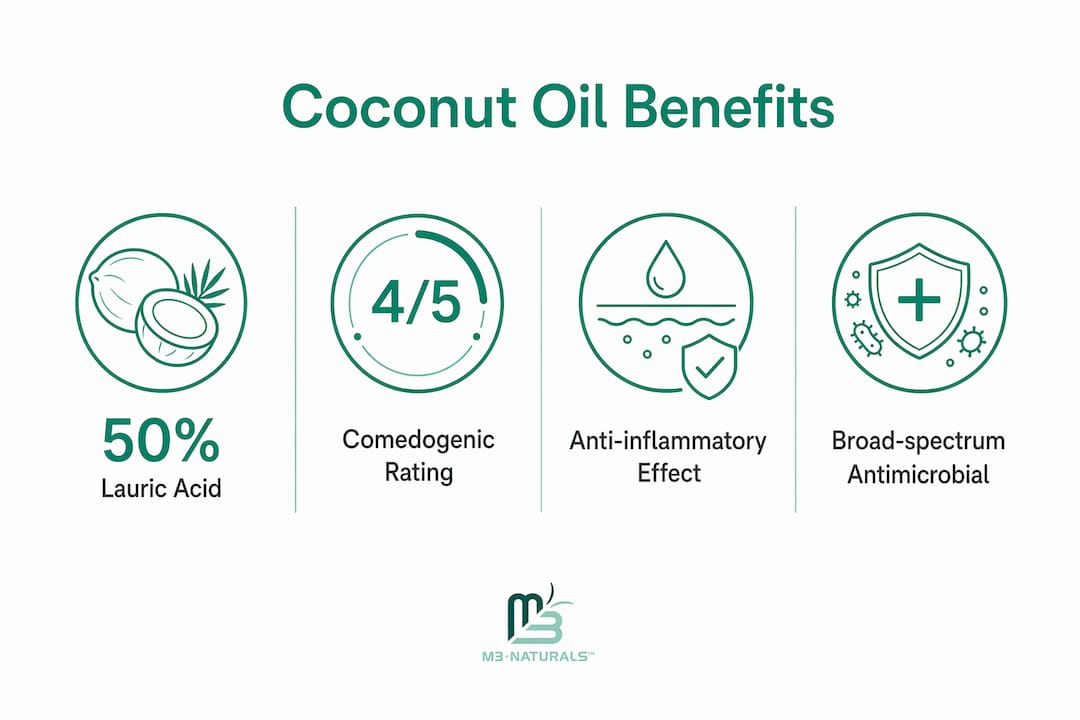
Coconut oil is defined by dermatologists as an occlusive emollient, meaning it forms a physical barrier on the skin surface that slows moisture loss while delivering active fatty acids directly to skin cells. Understanding why coconut oil works on skin starts with its composition: roughly 50% lauric acid, a medium-chain fatty acid with proven antimicrobial and anti-inflammatory properties. That single fact separates coconut oil from most plant-based oils. M3naturals builds several of its body care formulas around coconut oil precisely because the science behind it is solid, not trendy. This article breaks down the chemistry, the benefits, and the honest limitations so you can use it wisely.
What components in coconut oil benefit skin health and hydration?
Coconut oil delivers skin benefits through a specific set of compounds, not through any single magic ingredient. Each component plays a distinct role.
- Lauric acid makes up about 50% of virgin coconut oil and provides broad-spectrum antimicrobial protection. That concentration is high enough to actively inhibit bacterial and fungal growth on the skin surface.
- Capric acid works alongside lauric acid to reinforce the antimicrobial effect. Together, they cover a wider range of common skin pathogens than either compound alone.
- Vitamin E and polyphenols give virgin coconut oil its antioxidant and anti-inflammatory properties. These compounds neutralize free radicals that accelerate skin aging and irritation.
- Fatty acid occlusive barrier: The high fatty acid content creates a physical seal on the skin surface. This slows transepidermal water loss, the process by which skin dries out throughout the day.
- Filaggrin and involucrin support: A 2018 in vitro study showed that coconut oil enhances key skin barrier proteins filaggrin and involucrin. These proteins are structural building blocks of the outer skin layer and are often depleted in people with eczema or chronically dry skin.
Understanding how carrier oils work on skin helps put coconut oil in context. It is not just a surface lubricant. It actively supports the biological machinery that keeps skin intact.
Pro Tip: Choose virgin or extra virgin coconut oil for skin use. Refined coconut oil loses many of its polyphenols and antioxidants during processing, reducing its therapeutic value.
How does coconut oil soothe skin irritation and inflammation?
Coconut oil reduces inflammation through two parallel mechanisms: direct chemical action on inflammatory pathways and physical repair of the skin barrier that triggers irritation in the first place.

Clinical observations show that extra virgin coconut oil improves eczema symptoms, including inflammation and swelling, within weeks of consistent topical application. That timeline matters because it reflects real barrier repair, not just surface hydration. When the skin barrier is compromised, irritants and allergens penetrate more easily, creating a cycle of inflammation. Coconut oil interrupts that cycle by sealing the barrier and delivering anti-inflammatory fatty acids simultaneously.
Research confirms that coconut oil reduces redness and swelling and supports protective barrier function in people with inflamed skin. The mechanism involves fatty acids that repair damaged cell membranes at the cellular level. Healthy cell membranes are less permeable to irritants, which directly reduces the inflammatory response.
The practical benefits for people with atopic dermatitis or mild eczema are meaningful:
- Reduced transepidermal water loss from the occlusive barrier keeps already-sensitive skin from drying out further.
- Lowered inflammatory marker activity from lauric acid and polyphenols calms redness without the side effects associated with topical corticosteroids.
- Structural membrane repair from fatty acids rebuilds the lipid matrix of skin cells, restoring their ability to hold moisture and resist irritants.
- Protein expression support through enhanced filaggrin production strengthens the physical structure of the outer skin layer over time.
Coconut oil is not a replacement for prescribed treatments in severe cases. For mild to moderate irritation and dry, inflamed skin, however, it offers a well-supported natural option.
What are the antimicrobial benefits of coconut oil on skin?
Coconut oil functions as a broad-spectrum antimicrobial by disrupting the cell membranes of bacteria, fungi, and mites. That mechanism is fundamentally different from how antibiotic creams work. Because coconut oil attacks membrane structure rather than a specific biological pathway, pathogens cannot develop resistance to it the way they do with conventional antibiotics.
The primary agent behind this effect is lauric acid. It inserts itself into microbial cell membranes and destabilizes them, causing the pathogen to break apart. This action is effective against common skin threats including Staphylococcus aureus, the bacterium most associated with eczema flares and infected wounds, as well as Candida species responsible for fungal skin infections.
| Pathogen type | Coconut oil action | Skin benefit |
|---|---|---|
| Staphylococcus aureus | Disrupts bacterial membrane | Reduces colonization linked to eczema |
| Candida (fungal) | Breaks down fungal cell wall | Inhibits surface fungal infections |
| Demodex mites | Destabilizes mite membrane | Reduces mite-related skin irritation |
| Acne-causing bacteria | Inhibits Cutibacterium acnes growth | May reduce mild acne on body skin |
One distinction worth understanding: coconut oil’s antimicrobial action is a surface effect. It works on the skin’s outer layer and does not penetrate deeply enough to address systemic infections. For surface-level skin health, including body skin prone to bacterial or fungal issues, that surface action is exactly what you need.
- No resistance development: The membrane-disruption mechanism means pathogens cannot adapt and become resistant over time.
- Gentle on skin microbiome: Unlike broad-spectrum antibacterial cleansers, coconut oil targets pathogens without stripping the beneficial bacteria that support healthy skin.
- Complementary to barrier repair: Antimicrobial protection and barrier restoration work together. A sealed, pathogen-free skin surface heals faster and stays healthier longer.
Are there any risks or skin types less suited for coconut oil use?
Coconut oil is not universally beneficial. Its comedogenic rating of 4 out of 5 means it has a high potential to clog pores, making it a poor choice for acne-prone or oily skin types, particularly on the face.
That said, the comedogenic scale tells only part of the story. Some dermatologists note that coconut oil breaks down into fatty acids that repair cell membranes rather than clog pores for certain individuals. Individual skin barrier chemistry varies significantly, which means two people with similar skin types can have opposite reactions to the same oil. This variability is why patch testing and a trial period are non-negotiable before adding coconut oil to a regular routine.
Practical guidelines for safe use:
- Patch test first: Apply a small amount to the inner forearm and observe for 24–48 hours before using on larger areas.
- Avoid the face if acne-prone: Stick to body areas like legs, arms, elbows, and knees where pores are less reactive.
- Keep it away from the eye area: Coconut oil can cause temporary blurriness if it contacts the eyes directly.
- Consider alternatives for sensitive facial skin: Lighter oils with lower comedogenic ratings work better for facial application on sensitive or oily skin types.
- Monitor for breakouts: If new blemishes appear within two weeks of use, discontinue and reassess.
Understanding why face oils replace moisturizer for some people can help you decide whether coconut oil fits your specific routine. For dry skin on the body, it is one of the most effective and affordable natural options available. For oily or acne-prone facial skin, a lighter oil is a smarter starting point.
Pro Tip: Use coconut oil as a post-shower body treatment on slightly damp skin. The residual moisture helps the oil spread more evenly and locks in hydration more effectively than applying it to completely dry skin.
Key Takeaways
Coconut oil works on skin because its lauric acid content, occlusive fatty acids, and antioxidant compounds work together to lock in moisture, fight pathogens, and rebuild the skin barrier from the outside in.
| Point | Details |
|---|---|
| Lauric acid is the key driver | It makes up about 50% of virgin coconut oil and provides broad-spectrum antimicrobial protection. |
| Occlusive barrier locks in moisture | Fatty acids form a physical seal that slows water loss and softens skin texture. |
| Skin barrier proteins are enhanced | Coconut oil boosts filaggrin and involucrin, the structural proteins that keep skin intact. |
| Comedogenic rating limits facial use | A rating of 4 out of 5 makes coconut oil a poor fit for acne-prone or oily facial skin. |
| Patch testing is non-negotiable | Individual skin responses vary widely, so a trial period before regular use prevents breakouts. |
What I’ve learned from watching people use coconut oil on their skin
Most people treat coconut oil as a simple moisturizer. That framing undersells it and also sets up unrealistic expectations for the wrong skin types.
What I’ve observed over years of following natural skincare closely is this: coconut oil performs best when it is used as a targeted treatment rather than an all-over daily moisturizer. People with chronically dry elbows, rough heels, or post-shave irritation on legs consistently report strong results. People who slather it on an oily T-zone and then wonder why they broke out are using the right ingredient in the wrong place.
The antimicrobial angle is also underappreciated. Most people reach for coconut oil because they want softer skin. The fact that it simultaneously reduces surface bacteria and supports barrier proteins is a genuine bonus that most moisturizers cannot offer. That combination is why it shows up in professional body care formulas, not just home remedies.
My honest caution: do not skip the patch test because you read that coconut oil is “natural.” Natural does not mean universally safe for every skin type. The comedogenic rating is real, and for some people, it causes breakouts within days. Start small, observe carefully, and adjust based on what your skin actually tells you.
— SuperNatural
Natural skincare with coconut oil from M3naturals
M3naturals formulates its body care products around ingredients that have real skin science behind them, and coconut oil is central to that approach.

The natural body scrubs collection combines coconut oil’s moisturizing and barrier-supporting properties with exfoliating ingredients that remove dead skin cells and improve texture. For deeper skin nourishment, the coconut oil massage oils deliver the same fatty acid benefits in a format designed for full-body application. Both collections use ethically sourced ingredients and are built for people who want results they can actually see and feel, without synthetic fillers.
FAQ
Why does coconut oil moisturize skin so effectively?
Coconut oil creates an occlusive barrier on the skin surface that physically slows water evaporation. Its fatty acids also enhance skin barrier proteins like filaggrin, which improve the skin’s own ability to retain moisture long term.
Is coconut oil good for dry skin on the body?
Coconut oil is well suited for dry skin on the body, particularly on areas like legs, arms, and elbows. A randomized trial showed virgin coconut oil enhanced hydration at a level comparable to mineral oil.
Can coconut oil cause breakouts?
Coconut oil has a comedogenic rating of 4 out of 5, which means it can clog pores and trigger breakouts, especially on acne-prone or oily facial skin. Patch testing before regular use reduces this risk.
How does coconut oil fight bacteria on skin?
Lauric acid in coconut oil disrupts the cell membranes of bacteria, fungi, and mites, effectively killing them without triggering resistance. This surface-level antimicrobial action makes it useful for body skin prone to bacterial or fungal issues.
What type of coconut oil is best for skin care?
Virgin or extra virgin coconut oil retains the highest levels of polyphenols, vitamin E, and lauric acid. Refined coconut oil loses many of these active compounds during processing, reducing its skin care benefits.