

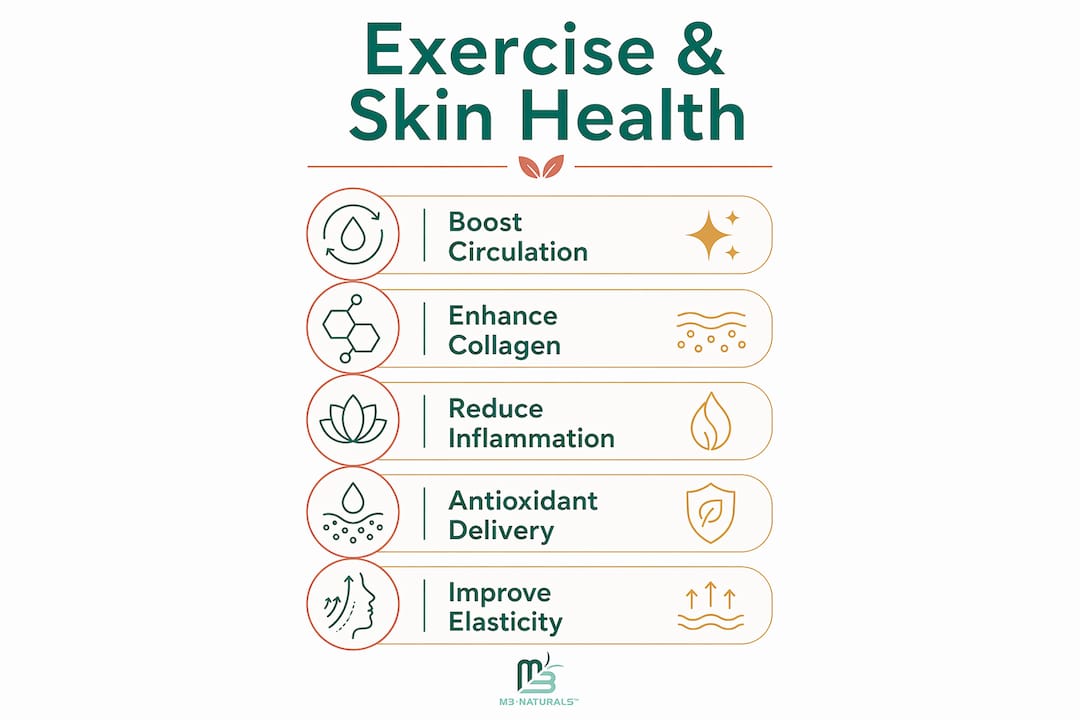
Regular exercise is one of the most effective tools for improving skin health, directly boosting circulation, stimulating collagen synthesis, and reducing systemic inflammation. The role of exercise in skin health goes far beyond a post-workout glow. Structured physical activity over 12 months produces a 15.8%–20.4% increase in skin hydration and a 16.7%–22.3% improvement in dermal elasticity. Those same participants showed 44%–56% fewer dermatology visits and a 37%–73% reduction in prescription dermatological medication use. That is not a cosmetic side effect. That is measurable, clinical-grade improvement driven by physical activity.
How does exercise physiologically improve skin health?
Exercise changes skin from the inside out. When your heart rate rises, blood flow to the skin increases, delivering oxygen and nutrients directly to skin cells. This process accelerates cellular metabolism and speeds up the natural renewal cycle that keeps skin looking fresh.
The structural benefits go deeper than circulation. Exercise acts as a biological reprogramming tool that enhances dermal thickness and elasticity through internal mechanisms. No topical cream replicates this effect because topical products work on the surface, while exercise triggers changes at the cellular and genetic level.
Collagen synthesis is one of the most significant physical activity skin benefits. Exercise stimulates fibroblasts, the cells responsible for producing collagen and hyaluronic acid, which are the two structural compounds that keep skin firm and hydrated. As collagen production rises, the dermis thickens and becomes more resilient to aging.
Exercise also reduces circulating inflammatory markers. Chronic low-grade inflammation is a root cause of acne, psoriasis, and accelerated skin aging. Physical activity suppresses these inflammatory pathways, which is why consistent exercisers tend to have calmer, clearer skin over time.
Pro Tip: Think of exercise as a prescription for your skin’s internal architecture. No serum penetrates deep enough to rebuild dermal collagen the way consistent training does.
- Increased blood flow delivers oxygen and nutrients to skin cells
- Collagen and hyaluronic acid production rises with regular training
- Inflammatory markers decrease, reducing acne and psoriasis flares
- Cellular renewal accelerates, improving skin texture and tone
- Growth hormone released during exercise supports tissue repair
What types of exercise best support skin health?
Not all workouts produce the same skin outcomes. Aerobic exercise, resistance training, and hybrid models each contribute differently, and understanding those differences helps you build a routine that targets specific skin goals.
Aerobic exercise
Aerobic exercise, including running, cycling, and swimming, functions as a systemic antioxidant delivery system. It increases blood flow throughout the body, flushes waste products from skin tissue, and activates antioxidant pathways that protect against oxidative stress. The visible result is better skin tone, reduced puffiness, and that well-known post-workout flush that signals healthy circulation.
Resistance training
Resistance training reduces circulating inflammatory factors, prevents collagen degradation, and thickens the dermis. These effects make it one of the most powerful anti-aging interventions available without a prescription. Two to three weekly strength training sessions targeting major muscle groups also support bone density, which provides structural scaffolding for facial skin and prevents the sunken appearance associated with aging.
Hybrid training
Hybrid training combining aerobic and resistance work optimizes skin rejuvenation by activating both systemic antioxidant pathways and localized structural gene expression. Combined modalities improve collagen stability and skin resilience better than either type alone. This makes hybrid training the most effective exercise model for skin health.
| Exercise type | Primary skin benefit | Key risk |
|---|---|---|
| Aerobic (running, cycling) | Boosts circulation and antioxidant defense | UV exposure during outdoor sessions |
| Resistance training | Thickens dermis, preserves collagen | Skin irritation from equipment friction |
| Swimming | Full-body circulation, low impact | Chlorine-induced dryness |
| Hybrid (aerobic + resistance) | Collagen stability and oxidative protection | Overtraining fatigue if recovery is poor |
Pro Tip: If you can only commit to one change, add two resistance sessions per week to your existing cardio routine. The collagen and anti-inflammatory benefits stack quickly.
How to balance exercise and skincare routines for optimal results?
Exercise creates the internal conditions for great skin. What you do before and after a workout determines whether those conditions translate into visible results or get cancelled out by avoidable mistakes.
The skin’s post-workout glow comes from temporary vasodilation. Long-term skin benefits require consistent training and consistent hygiene. Sweat left on skin clogs pores and triggers breakouts, which is why cleansing promptly after exercise is non-negotiable for anyone with acne-prone skin.
Outdoor workouts introduce a separate risk. UV exposure during running or cycling accelerates photoaging, which counteracts the structural benefits exercise builds internally. Applying broad-spectrum SPF 30 or higher before any outdoor session is the single most effective protective step you can take.
Swimmers face a specific challenge. Chlorine exposure requires immediate post-exercise rinsing and moisturizing to prevent dryness and irritation, particularly for people with sensitive skin or eczema. Skipping this step strips the skin’s natural moisture barrier and leaves it vulnerable to flaking and tightness.
Here is a practical post-workout skin routine for active people:
- Rinse or shower within 30 minutes of finishing your workout
- Use a gentle, non-stripping cleanser to remove sweat and bacteria
- Apply a lightweight body scrub two to three times per week to clear dead skin cells and prevent congestion
- Follow with a moisturizer suited to your skin type while skin is still slightly damp
- Apply SPF before any outdoor session, not just on sunny days
Proper post-exercise hygiene is the bridge between the internal benefits exercise creates and the visible results you see in the mirror. Without it, sweat, bacteria, and environmental residue undo much of the good work.
What common skin challenges can exercise influence?
Exercise improves most skin conditions, but it also introduces specific challenges that are worth understanding before they become problems.
-
Acne. Exercise typically improves acne-prone skin by reducing inflammation, provided sweat is properly cleansed after each session. The anti-inflammatory effect of regular training lowers the hormonal and bacterial triggers that cause breakouts. Skipping the post-workout cleanse reverses this benefit by trapping bacteria and sebum in pores.
-
Eczema. The anti-inflammatory benefits of consistent exercise reduce eczema flare frequency over time. Sweat itself can irritate sensitive skin during a session, so rinsing immediately afterward and applying a fragrance-free moisturizer minimizes this short-term trigger.
-
Exercise-related skin complications. About 13.2% of active individuals report mild, short-term skin complications related to exercise. These include chafing, heat rash, and contact irritation. The rate is low, and most complications resolve quickly with basic hygiene and protective clothing.
-
Runner’s face. The perceived facial aging in long-distance runners is mainly due to fat loss in facial compartments, not collagen loss or skin degradation. Balanced nutrition and resistance training preserve facial volume while maintaining the cardiovascular benefits of running.
-
Chlorine dryness. Swimmers who skip post-session moisturizing experience cumulative moisture barrier damage. Using a rich, natural moisturizer with ingredients like coconut oil or shea butter after rinsing chlorine off restores the barrier effectively. Pairing this with a body scrub routine removes chlorine residue and dead skin cells that dull the complexion.
The pattern across all these challenges is consistent. Most exercise effects on skin are positive when basic care is applied. The risks are manageable and temporary. The benefits are structural and long-lasting.
Key takeaways
Exercise is the most effective non-prescription tool for improving skin hydration, elasticity, and collagen density when combined with consistent post-workout hygiene and UV protection.
| Point | Details |
|---|---|
| Exercise improves skin measurably | Structured training increases skin hydration by up to 20.4% and elasticity by up to 22.3% over 12 months. |
| Hybrid training produces the best results | Combining aerobic and resistance work activates both antioxidant pathways and structural collagen gene expression. |
| Post-workout hygiene is non-negotiable | Sweat left on skin clogs pores and triggers breakouts, canceling out exercise’s anti-inflammatory benefits. |
| Resistance training is an anti-aging tool | Two to three sessions per week thickens the dermis, reduces inflammation, and preserves collagen. |
| Most exercise skin risks are manageable | Only about 13.2% of active people experience mild, short-term skin complications, and all are preventable with basic care. |
Why I think most people underestimate exercise as a skincare strategy
People spend significant money on serums, retinoids, and professional treatments while overlooking the most structurally powerful tool available: consistent physical training. I have seen this pattern repeatedly. Someone invests in an expensive skincare routine but skips resistance training entirely, then wonders why their skin still looks dull and lacks firmness.
The science is clear. Exercise rebuilds the dermis from within, suppresses the inflammatory pathways that drive acne and aging, and improves hydration at a cellular level. No topical product does all three simultaneously. That does not mean skincare products are useless. It means they work best when exercise has already improved the underlying tissue they are applied to.
The combination that actually works is two to three resistance sessions per week, regular aerobic activity, and a simple post-workout skincare routine. Add SPF for outdoor workouts and a proper moisturizer after swimming, and you have covered the major variables. The holistic skincare approach that combines internal and external care consistently outperforms either strategy alone.
One thing I want to push back on is the idea that more exercise always means better skin. Extreme training without recovery, proper nutrition, or sun protection can accelerate facial fat loss and UV damage. Consistency and balance produce better skin outcomes than intensity alone.
— SuperNatural
M3naturals products that support your active skin routine
Exercise builds the internal foundation for healthy skin. What you apply after your workout protects and extends those benefits.

M3naturals offers a skincare collection designed for people who take both their fitness and their skin seriously. The range includes natural body scrubs made with ingredients like charcoal and coconut oil that clear post-workout congestion and smooth skin texture without stripping moisture. The body care line covers post-exercise moisturizing and recovery, using botanicals like lavender and turmeric that calm irritation and support the skin barrier. Every product is formulated with ethically sourced, natural ingredients that complement the internal work your workouts are already doing.
FAQ
Can exercise clear acne?
Exercise reduces the inflammation that drives acne, which typically improves breakout frequency and severity. The key condition is cleansing sweat from skin promptly after each session to prevent pore clogging.
What is the best exercise for skin health?
Hybrid training combining aerobic exercise and resistance training produces the best skin outcomes. Aerobic work boosts circulation and antioxidant defense, while resistance training thickens the dermis and preserves collagen.
How long before exercise improves skin?
Measurable improvements in skin hydration and elasticity appear after consistent structured training over several months. Short-term benefits like improved circulation and reduced puffiness are visible within weeks.
Does sweating during exercise damage skin?
Sweating itself does not damage skin. Sweat left on the surface for extended periods clogs pores and can trigger breakouts, which is why showering or rinsing within 30 minutes of finishing a workout matters.
Is runner’s face a real concern?
Runner’s face refers to facial volume loss seen in long-distance runners, caused by fat loss in facial compartments rather than collagen degradation. Balanced nutrition and resistance training preserve facial volume while maintaining cardiovascular fitness.